
Commercial Holiday Lighting: The 2026 Compliance and Installation Guide
Yes, you can install lights on commercial properties, provided the work adheres to local electrical codes and building regulations. Radiant Holiday Designs specializes in professional holiday and permanent outdoor lighting for commercial clients. This guide covers the essential requirements for commercial lighting, including permits, code compliance, and maintenance strategies to ensure a safe and impactful display. For additional details, review the radiantholidaydesignsllc com.
Commercial Electrical Permits
Commercial electrical permits are official authorizations issued by local authorities having jurisdiction (AHJ) that allow specific electrical work to proceed. Unlike residential holiday lights, which often fall under temporary exemptions, commercial installations frequently require permits due to the scale and permanence of the systems. The requirement depends on the complexity of the installation and local municipal codes. For additional details, review the .
When Permits Are Required
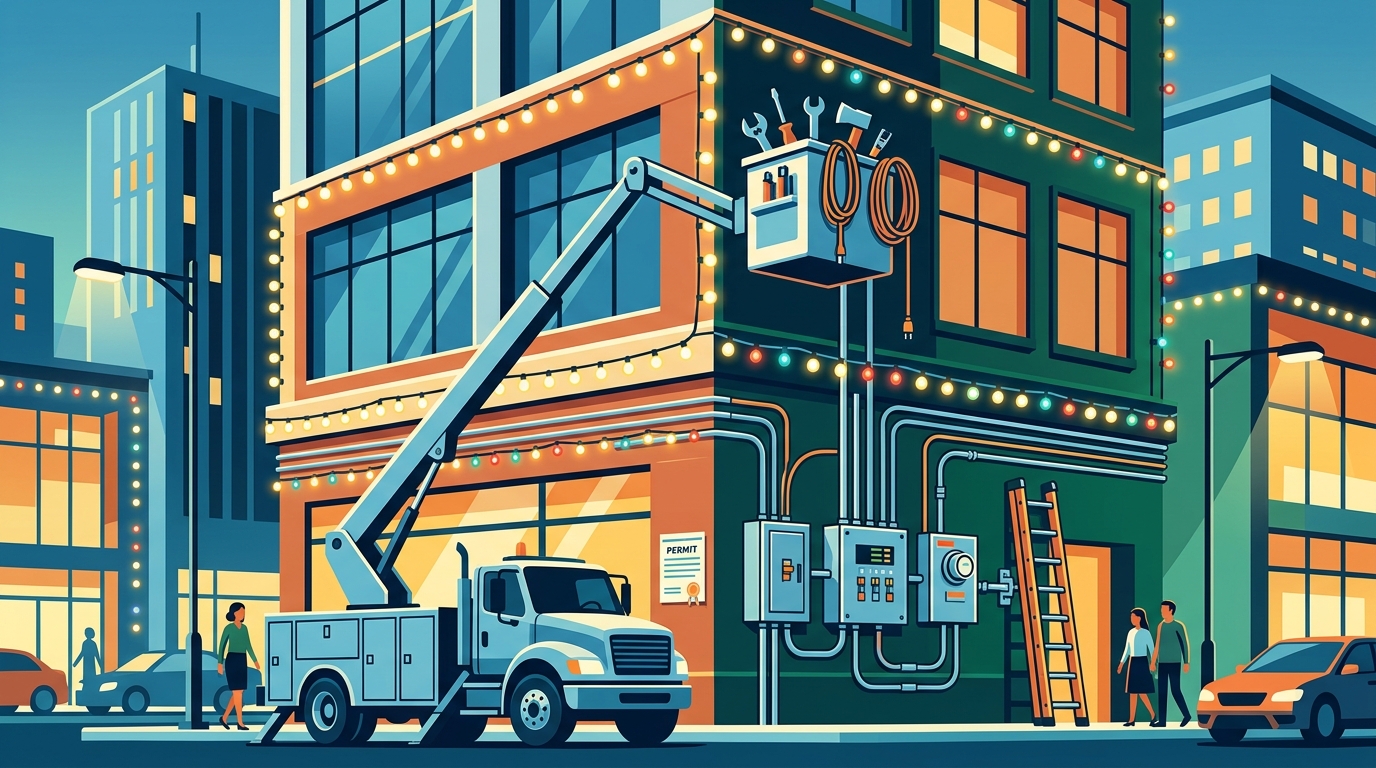
Permits are typically mandatory when the installation involves new wiring, conduit runs, or connections to the main service panel. If the lighting system draws significant power or requires dedicated circuits, the local electrical inspector must review the plans. This ensures the building's electrical infrastructure can handle the additional load without risk of overload or fire. For additional details, review the Customer Experience.
The Permit Process
Obtaining a permit involves submitting detailed electrical diagrams and load calculations to the local building department. A licensed electrician or contractor usually handles this paperwork. Once approved, the work can begin. After installation, an inspector will verify the work meets code before issuing a final sign-off. Skipping this step can result in fines and forced removal of the lights. For additional details, review the Frequently Asked Questions.
Building Codes Compliance
Building codes compliance is the adherence to established safety standards that govern construction and electrical installations. For commercial properties, these codes are stricter than residential guidelines. They address fire safety, structural integrity, and electrical safety. Non-compliance can lead to liability issues and insurance complications. For additional details, review the About.
Fire Safety and Materials
Commercial lighting must use materials that meet fire resistance standards. Wires must be rated for outdoor use and protected from physical damage. The National Electrical Code (NEC) provides the baseline for these requirements. Local amendments may impose additional restrictions on the type of lighting fixtures and their placement relative to building materials.
Structural Considerations
Mounting lights on commercial facades requires ensuring the structure can support the weight. This is particularly important for large displays or permanent lighting. Engineers may need to assess the load capacity of eaves, walls, or roofs. Proper anchoring prevents damage to the building and ensures the safety of pedestrians and employees.
Licensed Contractor Requirements
Licensed contractor requirements mandate that electrical work be performed by individuals or companies holding valid state or local licenses. In most jurisdictions, only licensed electricians can perform wiring work. This ensures that the installation meets professional standards and that the contractor carries appropriate insurance and liability coverage.
Why Licensing Matters
Using a licensed contractor protects the property owner from liability in case of accidents or code violations. Licensed professionals are trained in safety protocols and stay current with code changes. They also provide warranties on their work, offering peace of mind for commercial clients. Unlicensed work can void insurance policies and create legal risks.
Verifying Contractor Credentials
Before hiring, verify the contractor's license status with the state licensing board. Check for reviews and references from other commercial clients. Ensure the company carries general liability and workers' compensation insurance. Radiant Holiday Designs operates with fully licensed and insured teams, ensuring all commercial projects meet regulatory standards.
Commercial Lighting Installation
Design and Planning
Installation Best Practices
Professional installers use proper mounting hardware and weatherproof connections. They ensure all wiring is concealed or protected to maintain a clean appearance. Safety is a top priority, with strict adherence to ladder safety and electrical protocols. The installation process is documented for future maintenance and inspections.
LED Upgrades
Energy Efficiency and Cost Savings
LEDs consume up to 75% less energy than incandescent bulbs. This translates to lower electricity bills, especially for large commercial displays that run for extended periods. The reduced heat output also makes LEDs safer for use near flammable materials. Over time, the energy savings can offset the initial cost of the upgrade.
Longevity and Maintenance
LEDs have a much longer lifespan than traditional bulbs, often lasting 50,000 hours or more. This reduces the frequency of replacements and associated labor costs. LEDs are also more resistant to vibration and temperature fluctuations, making them ideal for outdoor commercial use. Their durability ensures a consistent and reliable light output throughout the season or year.
Maintenance Services
Seasonal Inspections
Year-Round Support
Key Takeaways
- Commercial lighting often requires electrical permits, unlike residential installations.
- Building codes compliance is essential for safety and liability protection.
- Only licensed contractors should perform commercial electrical work.
- Professional installation ensures a safe, durable, and aesthetically pleasing result.
- Regular maintenance services prevent outages and extend system life.
- Working with a specialized provider like Radiant Holiday Designs ensures regulatory compliance and quality results.
Frequently Asked Questions
Do I need a permit for commercial holiday lights?
It depends on the complexity of the installation. If the lights are plugged into existing outlets and do not involve new wiring, a permit may not be required. However, if the installation involves new circuits, conduit, or connections to the main panel, a permit is typically mandatory. Always check with your local building department.
What are the building code requirements for commercial lighting?
Why must I use a licensed contractor for commercial lighting?
Licensed contractors are trained in electrical safety and code compliance. They carry insurance and liability coverage, protecting you from legal risks. Unlicensed work can void insurance policies and result in fines. Using a licensed professional ensures the installation is safe and up to code.
How long does commercial lighting installation take?
Are LED lights better for commercial properties?
What does a maintenance service include?
Can I install commercial lights myself?
While simple plug-in displays may be manageable, complex commercial installations should be handled by professionals. Electrical work requires specialized knowledge and tools. Attempting to install complex systems yourself can be dangerous and may violate local codes. Hiring a licensed contractor is the safest and most reliable option.
How do I choose the right lighting design for my business?
Consider your business's branding, goals, and budget. The design should enhance your property's aesthetics and attract customers. Work with a professional designer who can create a custom plan that aligns with your vision. They can recommend the right fixtures, colors, and placement to achieve the desired impact. Learn more: radiantholidaydesignsllc com.