Gutter Lights vs Wrapped Trees: The Ultimate Guide to Full Property Displays
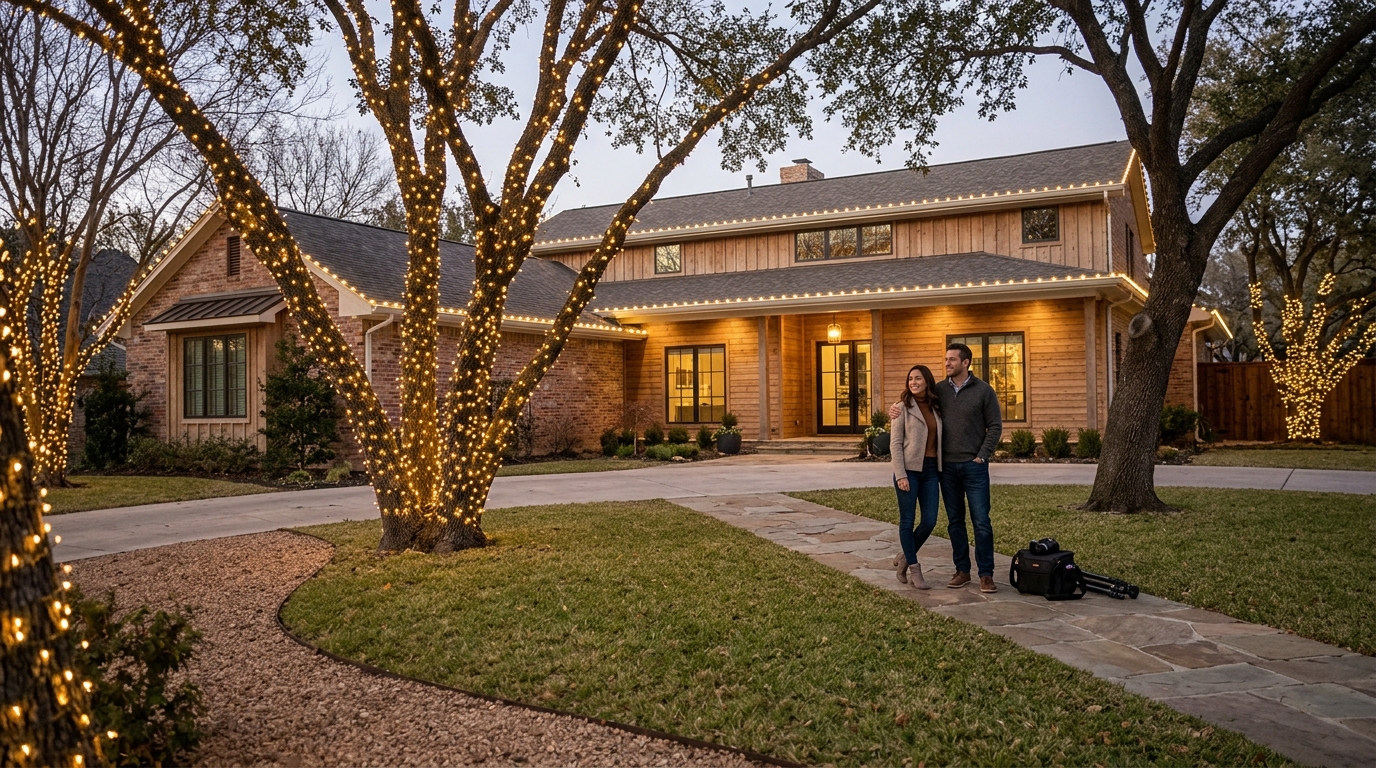
For a full property display, neither gutter lights nor wrapped trees is universally better; the optimal choice depends on your architectural layout and desired visual impact. Gutter lights provide uniform, high-visibility coverage along rooflines, while wrapped trees create focal points with depth and texture. This guide from Radiant Holiday Designs breaks down the labor, placement, and design strategies to help you choose the right combination for your home. For additional details, review the radiantholidaydesignsllc com.
Combined Display Strategy
Architectural Anchoring
Gutter lights serve as the primary structural element. They trace the roofline, eaves, and fascia boards, creating a continuous line of light that frames the building. This technique is particularly effective for homes with complex rooflines, where the lights highlight peaks, valleys, and dormers. By establishing this boundary, the display gains a sense of order and completeness. For additional details, review the .
Organic Focal Points
Wrapped trees act as secondary focal points. They break the rigid geometry of the house with natural, irregular shapes. When placed strategically in the front yard or along walkways, these trees guide the viewer's eye toward the entrance. The contrast between the straight lines of the gutter lights and the spiral patterns of the tree wraps creates visual tension that keeps the display engaging. For additional details, review the Customer Experience.
Balance and Proportion
Success in a combined strategy relies on balance. If the gutter lights are dense and bright, the tree wraps should be slightly less intense to avoid visual competition. Conversely, if the trees are the main attraction, the gutter lights can be more subtle, serving as a backdrop rather than a rival. Radiant Holiday Designs assesses the specific proportions of each property to ensure that no single element overwhelms the others. For additional details, review the Frequently Asked Questions.
Labor Intensity Comparison
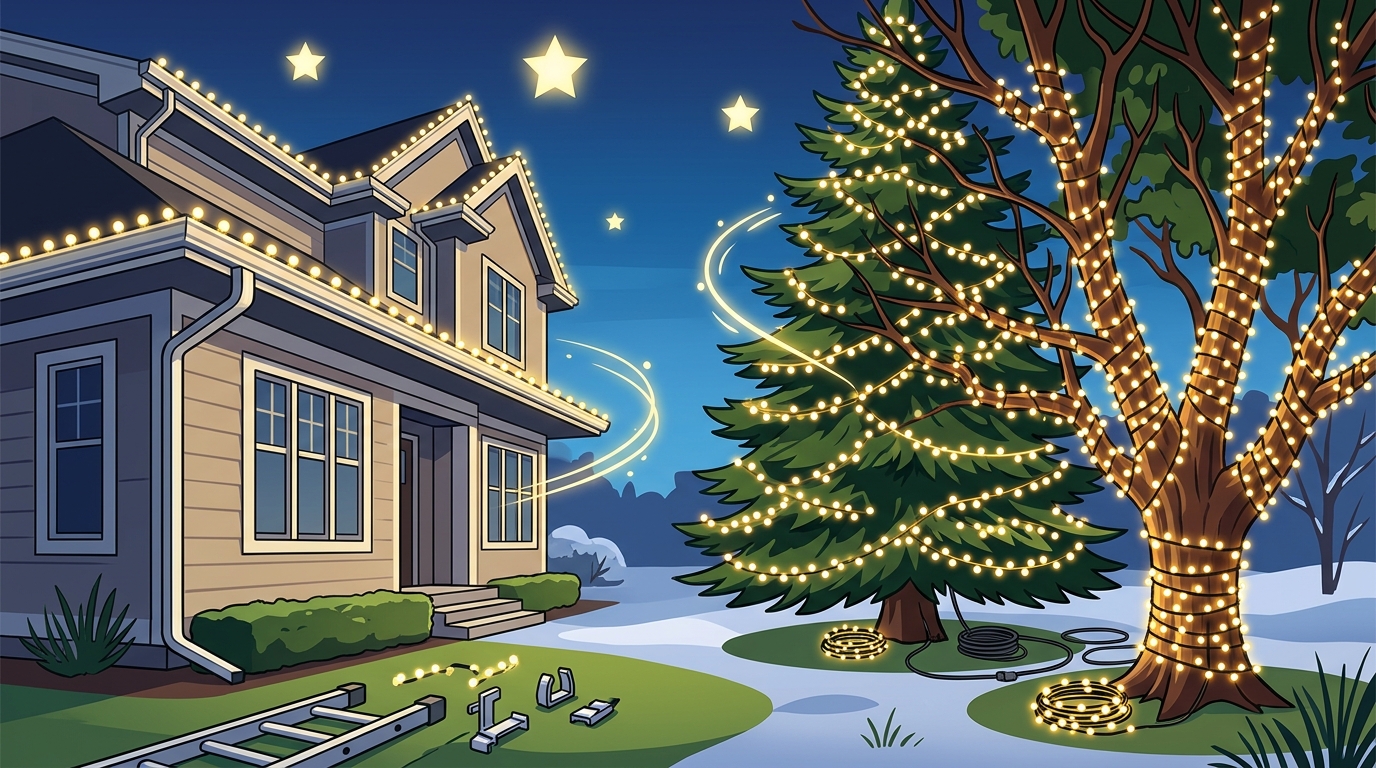
Understanding the labor involved in each method helps set realistic expectations for installation and removal. Gutter lights and wrapped trees require different skill sets, tools, and time commitments. The labor intensity directly impacts the cost and the level of professional expertise required for a safe and durable installation. For additional details, review the About.
Gutter Light Installation Effort
Installing gutter lights is a precision task. It requires working at height, often on ladders, to attach clips or hooks to the gutter or fascia. The process involves measuring, spacing, and securing thousands of individual lights or strands. Because the work is done on the exterior of the building, it demands careful attention to safety and weather conditions. A single large home can take several hours to install, depending on the complexity of the roofline.
Tree Wrapping Effort
Wrapping trees is a more tactile and time-consuming process. It involves physically climbing or using a ladder to spiral lights around the trunk and major branches. The installer must ensure that the lights are evenly spaced and that the branches are not damaged by the weight or tension of the wires. Unlike gutter lights, which follow a predictable path, tree wrapping requires constant adjustment to accommodate the natural shape of the tree. This makes it a more labor-intensive task per unit of light.
Removal and Storage
Removal is often more tedious than installation. Gutter lights must be carefully unclipped and coiled to prevent tangling. Tree wraps must be unwound from the branches, which can be difficult if the lights have been left up for an extended period. Professional services like Radiant Holiday Designs handle this entire cycle, including storage, which saves homeowners significant time and effort during the off-season.
| Factor | Gutter Lights | Wrapped Trees |
|---|---|---|
| Primary Skill | Height Safety and Precision | Branch Management and Spacing |
| Installation Time | Medium (Predictable Path) | High (Irregular Shapes) |
| Removal Difficulty | Low to Medium | Medium to High |
| Weather Sensitivity | High (Wind and Rain) | Medium (Branch Flexibility) |
| Visual Impact | Structural and Linear | Organic and Volumetric |
Gutter Light Placement
Effective gutter light placement is about more than just covering the roofline. It is about creating a continuous, unbroken line of light that enhances the architectural features of the home. Poor placement can result in gaps, uneven brightness, or a cluttered appearance that detracts from the overall display.
Spacing and Density
The spacing of lights along the gutter determines the perceived brightness and smoothness of the line. For a modern, sleek look, lights are spaced closely together, creating a solid band of color. For a more traditional, twinkling effect, lights are spaced further apart. The choice depends on the type of lights used and the desired aesthetic. Radiant Holiday Designs customizes the spacing based on the specific light type and the architectural style of the home.
Corner and Peak Handling
Corners and roof peaks are critical transition points. Lights must be bent or angled to follow the change in direction without creating sharp kinks or gaps. This requires careful planning and the use of appropriate clips or hooks. A well-executed corner transition ensures that the light line remains continuous and visually appealing from every angle.
Integration with Other Elements
Gutter lights should be integrated with other display elements, such as roof shingle lights or eave lights. This creates a layered effect that adds depth to the roofline. The gutter lights serve as the primary frame, while the shingle lights fill in the spaces between the gutters. This combination ensures that the entire roof surface is illuminated, creating a unified and impressive display.
Tree Wrapping Techniques
Tree wrapping is an art form that requires an understanding of tree structure and light behavior. The goal is to create a uniform, glowing cylinder or spiral that highlights the tree's natural shape. Different techniques can achieve different visual effects, from subtle accents to bold statements.
Spiral Wrapping
Spiral wrapping is the most common technique. It involves wrapping the lights in a continuous spiral from the base of the trunk to the top of the tree. The spacing between each turn of the spiral determines the density of the light. A tight spiral creates a solid, bright column, while a loose spiral creates a more delicate, twinkling effect. The installer must ensure that the spiral is consistent and that the lights are evenly distributed.
Branch Wrapping
Branch wrapping involves wrapping lights around individual branches rather than just the trunk. This technique adds texture and detail to the display. It is particularly effective for trees with prominent, well-spaced branches. The lights are wrapped around each branch, creating a web of light that extends outward from the trunk. This method requires more time and skill but results in a more intricate and visually complex display.
Light Type Selection
Layered Display Design
Layered display design is the process of combining multiple lighting elements to create depth and dimension. It involves using different types of lights, colors, and intensities to create a dynamic and engaging visual experience. A well-designed layered display guides the viewer's eye through the property, creating a sense of movement and flow.
Depth and Dimension
Layering adds depth to a flat display. By placing lights at different distances from the viewer, the display gains a three-dimensional quality. Gutter lights define the background, while wrapped trees and shrub lights create the midground and foreground. This layering effect makes the display appear larger and more impressive than a single plane of lights.
Color Coordination
Color coordination is essential for a cohesive layered display. The colors used in the gutter lights, tree wraps, and other elements should complement each other. A limited color palette is often more effective than a wide range of colors. For example, a display using white and red lights can create a classic, festive look, while a display using blue and purple lights can create a modern, icy theme. Radiant Holiday Designs works with clients to select a color palette that reflects their personal style and the character of their home.
Dynamic Effects
Dynamic effects, such as chasing, twinkling, or color-changing lights, can add movement and interest to a layered display. These effects should be used sparingly to avoid visual fatigue. A few dynamic elements can draw attention to specific features, while the rest of the display remains static and stable. The key is to balance movement with stillness to create a display that is engaging without being overwhelming.
Key Takeaways
- Neither gutter lights nor wrapped trees is universally better; the optimal choice depends on your architectural layout and desired visual impact.
- Gutter lights provide uniform, high-visibility coverage along rooflines, creating a continuous line of light that frames the building.
- Wrapped trees create focal points with depth and texture, breaking the rigid geometry of the house with natural, irregular shapes.
- Tree wrapping is more labor-intensive per unit of light due to the need to accommodate the natural shape of the tree.
- Effective gutter light placement involves careful spacing, corner handling, and integration with other elements to create a unified display.
- Layered display design combines multiple lighting elements to create depth, dimension, and a dynamic visual experience.
- Professional installation ensures safety, precision, and a cohesive final result that enhances the property's curb appeal.
Frequently Asked Questions
Can I use both gutter lights and wrapped trees in the same display?
Yes, using both is a common and effective strategy. Gutter lights define the house, while wrapped trees add landscape interest. This combination creates a balanced and cohesive display.
Which is more difficult to install, gutter lights or tree wraps?
Tree wrapping is generally more difficult and time-consuming because it requires working with irregular shapes and branches. Gutter lights follow a predictable path, making them easier to install in terms of precision.
Do gutter lights require more maintenance than tree wraps?
Gutter lights may require more frequent checks for loose clips or damaged wires due to exposure to wind and rain. Tree wraps are less affected by weather but can be difficult to remove if left up for a long time.
How do I choose the right color for my display?
Choose a color palette that complements your home's exterior and reflects your personal style. White lights are versatile, while colored lights can create specific themes. Radiant Holiday Designs can help you select a cohesive palette.
Is it safe to install lights on trees myself?
While possible, it can be risky due to the need for ladders and working at height. Professional installers have the training and equipment to do the job safely and efficiently.
How long does it take to install a full property display?
The time required depends on the size of the property and the complexity of the design. A full display with both gutter lights and wrapped trees can take several hours to a full day to install.
Do you store the lights after the holiday season?
Can I customize the design of my display?
Yes, we work with you to customize the design based on your preferences, budget, and the specific features of your property. You can choose the type of lights, colors, and placement to create a unique display.
Conclusion
Choosing between gutter lights and wrapped trees is not a binary decision. The best full property display combines both elements to create a balanced, layered, and visually stunning result. Gutter lights provide the structural framework, while wrapped trees add organic depth and focal points. By understanding the labor, placement, and design considerations for each, you can make an informed decision that enhances your home's curb appeal. Radiant Holiday Designs is here to help you navigate these choices, providing professional installation, maintenance, and storage services tailored to your specific needs. today to discuss your display goals and let us handle the ladders, the lights, and the takedown. Learn more: radiantholidaydesignsllc com.