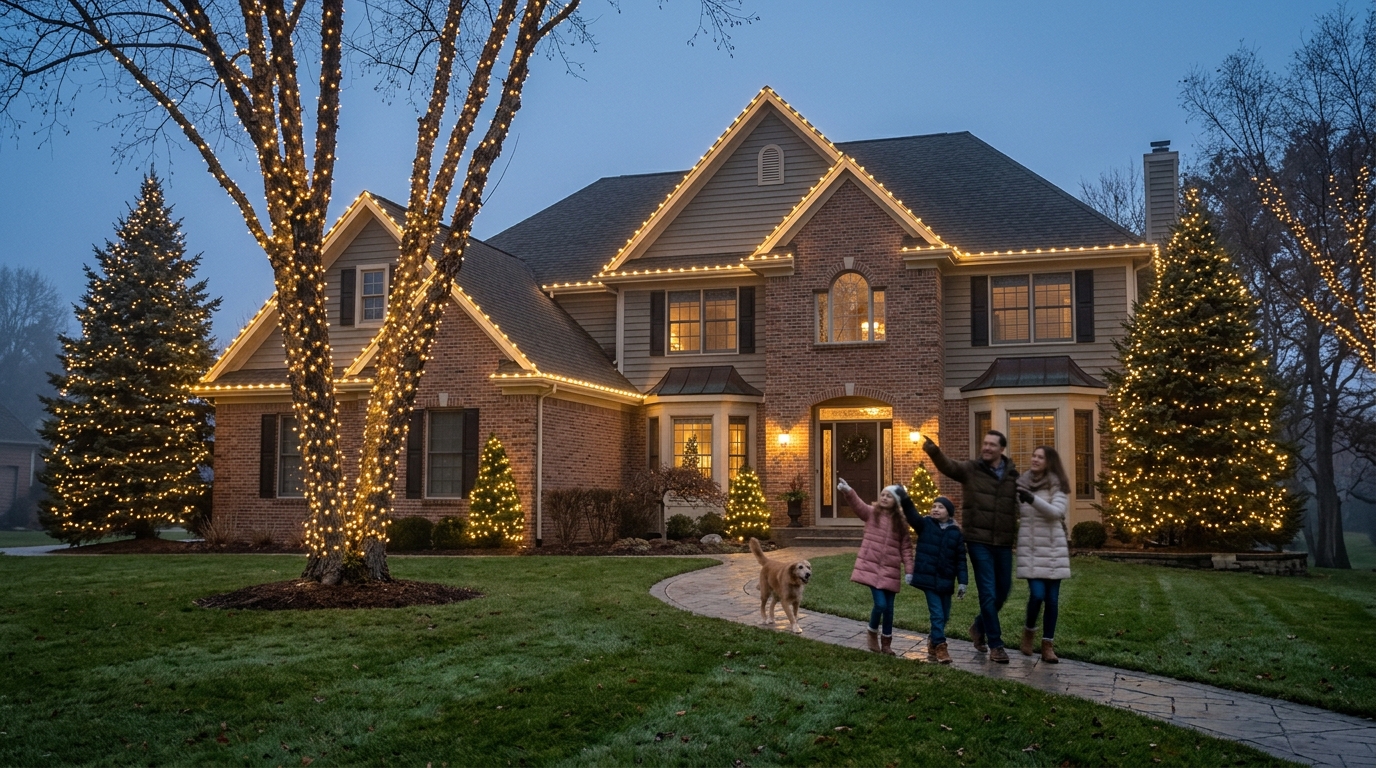
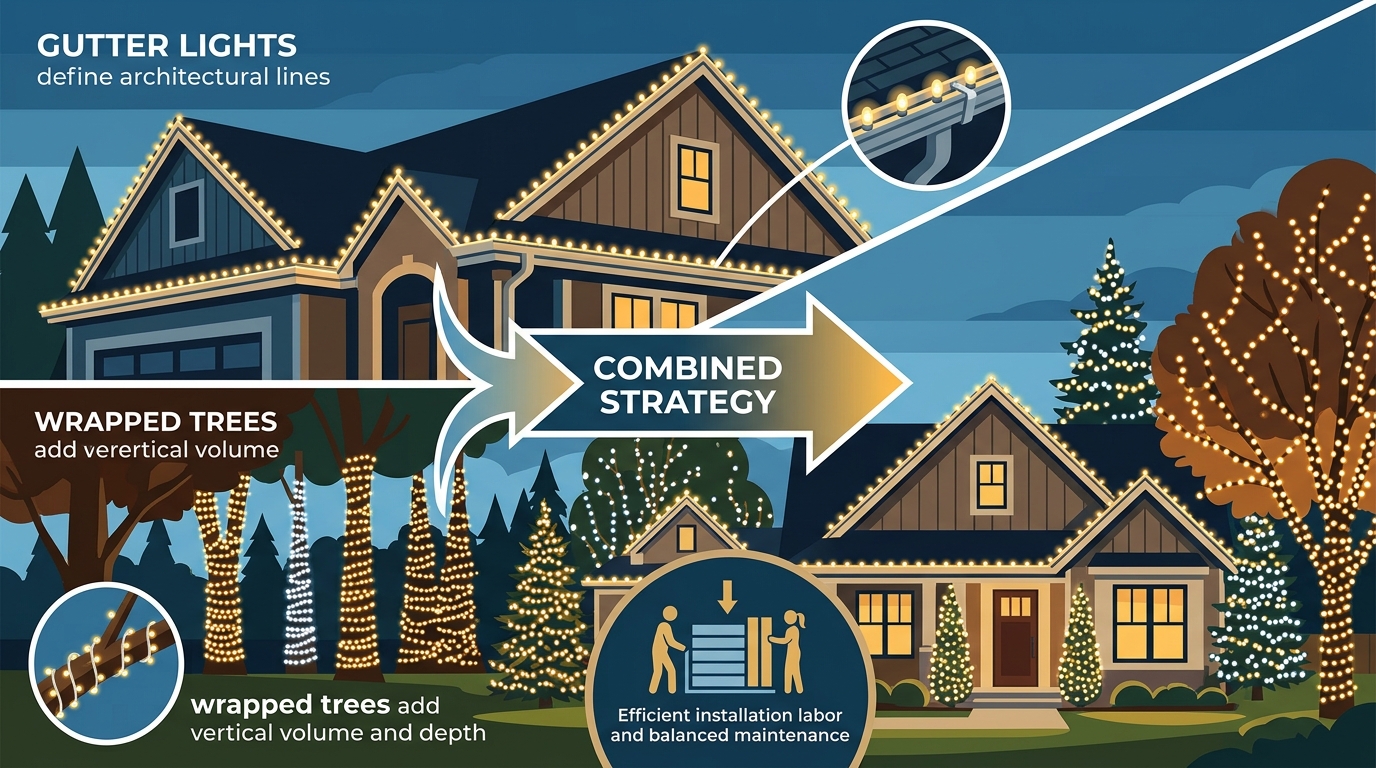
For a full property display, a combined strategy using both gutter lights and wrapped trees is superior to choosing one over the other. Gutter lights define architectural lines, while wrapped trees add vertical volume and depth. This guide explains how to balance these elements for maximum visual impact. We cover display strategy, labor intensity, and maintenance considerations for homeowners. For additional details, review the .
Combined Display Strategy
Creating a cohesive holiday display requires understanding the distinct roles of different lighting types. Gutter lights are linear LED strands designed to trace the edges of rooflines, eaves, and architectural features. They provide a clean, modern outline that emphasizes the structure of the home. Wrapped trees are evergreen trees covered in dense strands of lights, creating a glowing, volumetric presence in the landscape. For additional details, review the Customer Experience.
The Role of Gutter Lights
Gutter lights serve as the skeleton of the display. They guide the eye along the roofline and highlight the symmetry of the house. Because they are low-profile, they do not obstruct the view of the architecture. Instead, they frame it. This makes them ideal for defining the boundaries of the property display. They work best when installed along the entire perimeter of the roof. For additional details, review the Frequently Asked Questions.
The Role of Wrapped Trees
Wrapped trees act as the focal points of the landscape. They add height and texture that flat rooflines cannot provide. A well-wrapped tree glows from every angle, creating a three-dimensional effect. This adds depth to the overall scene. When placed strategically, these trees break up the horizontal lines of the house and create visual interest in the yard. For additional details, review the About.
Integrating Both Elements
The most effective displays use both elements in harmony. The gutter lights provide the frame, while the wrapped trees provide the content. This combination ensures that the display is visible from the street and from the sidewalk. It creates a layered effect that feels complete and professional. Avoid mixing too many other elements, as this can clutter the view. Stick to the core combination of lines and volume.
Labor Intensity Comparison
Understanding the effort required for each lighting type helps homeowners make informed decisions. Installation time, safety risks, and maintenance needs vary significantly between gutter lights and wrapped trees. Professional installation mitigates these risks but requires different skill sets for each task.
Installation Complexity
Installing gutter lights requires working at height on ladders. Precision is critical to ensure the lights follow the roofline evenly. This task involves climbing, balancing, and securing clips in tight spaces. It is physically demanding and carries a higher safety risk if done incorrectly. Professional crews use commercial-grade equipment to handle this safely.
Tree Wrapping Process
Wrapping trees is a ground-level task that requires patience and consistency. The goal is to achieve even coverage without tangling the strands. This process is less physically strenuous than ladder work but requires meticulous attention to detail. It involves wrapping the lights around the branches in a spiral pattern. The result is a dense, uniform glow that requires careful placement.
Maintenance and Takedown
Maintenance needs differ based on the location of the lights. Gutter lights are exposed to wind and weather at the roofline. They may require occasional adjustments to keep them straight. Wrapped trees are more stable but can suffer from branch damage if the lights are too tight. Takedown is the reverse of installation. Gutter lights must be carefully removed from the roof, while trees must be unwrapped without damaging the branches. Both tasks require time and care.
| Feature | Gutter Lights | Wrapped Trees |
|---|---|---|
| Primary Function | Architectural outlining | Landscape volume and depth |
| Installation Height | Roofline (Ladder required) | Ground level |
| Safety Risk | High (Falls) | Low |
| Visual Impact | Linear, clean lines | Three-dimensional, glowing |
| Maintenance Focus | Wind adjustment | Branch protection |
Key Takeaways
- A combined strategy using both gutter lights and wrapped trees creates the most impactful display.
- Gutter lights define the architectural lines of the home and provide a clean frame.
- Wrapped trees add vertical volume and depth to the landscape, creating a 3D effect.
- Installing gutter lights requires ladder work and carries higher safety risks than tree wrapping.
- Tree wrapping is a ground-level task that focuses on even coverage and branch protection.
- Professional installation ensures safety and precision for both lighting types.
- Maintenance needs differ, with gutter lights requiring wind adjustments and trees needing careful unwrapping.
- Choosing one over the other results in a less complete and less visually interesting display.
Frequently Asked Questions
Are gutter lights better than wrapped trees?
How long does it take to install gutter lights?
Installation time depends on the size of the roofline. Professional crews can typically complete a standard home in a few hours. It requires ladder work and precision.
Can I wrap my own trees?
Yes, tree wrapping is a ground-level task that many homeowners can do. It requires patience to ensure even coverage. However, professional wrapping ensures a denser, more uniform glow.
Do gutter lights damage the roof?
When installed correctly with proper clips, gutter lights do not damage the roof. Improper installation can cause issues. Professional installation uses commercial-grade clips to prevent damage.
How do I maintain wrapped trees?
Maintenance involves checking for loose strands and ensuring the lights are not too tight on the branches. Takedown requires careful unwrapping to prevent branch damage.
Is professional installation worth it?
Yes, professional installation ensures safety, precision, and a cohesive design. It saves time and reduces the risk of injury or damage. It also guarantees a high-quality finish.
Conclusion
Choosing between gutter lights and wrapped trees is a false dichotomy. The best property display combines both elements to create a layered, professional look. Gutter lights provide the architectural frame, while wrapped trees add the necessary volume and depth. By understanding the labor and maintenance requirements of each, you can make an informed decision. Radiant Holiday Designs offers full-service installation that handles both elements safely and precisely. today to design your perfect holiday display.