
Yes, Radiant Holiday Designs is a reliable choice for full property lighting because it manages the entire lifecycle of your display, from custom design and safe installation to season-long maintenance and final takedown. This guide examines the specific operational standards, safety protocols, and service boundaries that define the company's reliability. We will explore how to verify installer credentials and understand the precise limitations of their warranty coverage to ensure your investment is protected. For additional details, review the .
Opening Context: The Full-Service Model
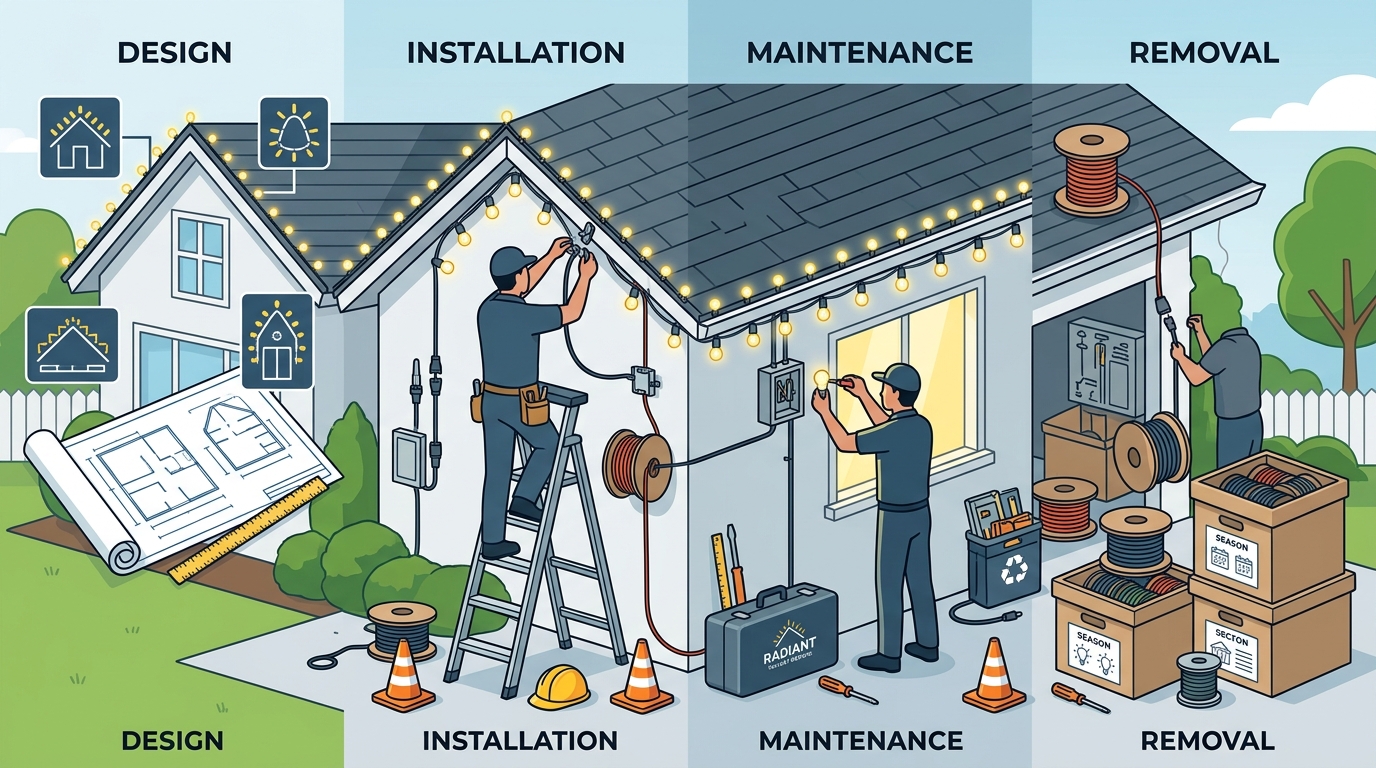
Full property lighting is a complex logistical challenge that requires more than just hanging strings of bulbs. It involves architectural assessment, electrical safety, and long-term maintenance. Radiant Holiday Designs operates as a full-service provider, meaning they handle the ladders, the lights, and the takedown. This approach removes the physical burden from the homeowner while introducing a dependency on the provider's operational consistency. To determine if a provider is truly reliable, one must look beyond marketing claims and examine the structural integrity of their service delivery. This guide breaks down the two most critical factors for evaluating this reliability: the verification of installer competence and the specific terms of their warranty. For additional details, review the Customer Experience.
Installer Reliability Verification
Reliability in holiday lighting installation is not just about the final aesthetic; it is about the safety and precision of the crew executing the work. When evaluating a provider, you must verify that their team is trained, insured, and equipped to handle the specific architectural challenges of your property. For additional details, review the Frequently Asked Questions.
Insurance and Liability Coverage
The most fundamental indicator of a professional installer is their insurance status. General liability insurance is a policy that covers third-party bodily injury and property damage claims arising from the contractor's operations. For a company working on ladders and handling electrical equipment, this coverage is non-negotiable. You should request a Certificate of Insurance (COI) before any work begins. This document verifies that the provider carries adequate limits to protect your home and your family in the event of an accident. If a provider cannot produce a current COI, they are operating without the financial safety net required for professional service. For additional details, review the About.
Technical Competence and Safety Protocols
Season-Long Maintenance Commitment
Reliability extends beyond the initial installation. A trustworthy provider offers season-long maintenance, which means they will return to fix any bulbs that go out or strands that fail without additional charge. This commitment indicates confidence in their installation quality. If a provider installs lights and then disappears until takedown, they are not offering a reliable full-service experience. The ability to respond to maintenance requests quickly and efficiently is a critical metric for evaluating long-term reliability.
Warranty Coverage Limitations
Understanding what is covered, and what is not, is essential for managing expectations. Warranties in the holiday lighting industry are often misunderstood. They typically cover the labor and materials provided by the installer, but they do not cover external factors or user error. Clarifying these limitations upfront prevents disputes later in the season.
Scope of Labor and Material Coverage
A standard warranty for professional installation covers the workmanship and the specific lighting products installed by the provider. This means that if a strand fails due to a manufacturing defect or if a clip breaks due to normal weather exposure, the provider will repair or replace it. However, this coverage is usually limited to the duration of the season. Once the lights are taken down and stored, the warranty on the installation labor typically expires. The lights themselves may have a separate manufacturer's warranty, but the labor to reinstall them is not covered under the initial installation contract.
Exclusions and External Factors
It is crucial to understand the exclusions in any warranty. Most providers do not cover damage caused by external factors such as severe storms, hail, or falling branches. They also do not cover damage resulting from user interference, such as homeowners attempting to adjust the lights themselves or using the electrical outlets for other purposes. Warranty exclusion is a clause that specifies conditions under which the provider is not liable for repairs. For example, if a tree branch falls on the display due to a storm, the provider will likely remove the damaged section but may not replace the lights at no cost. Clear communication of these exclusions is a sign of a transparent and reliable business.
Storage and Retrieval Terms
For providers who store lights over the winter, the warranty terms regarding storage are important. The provider is responsible for the safe storage of the equipment, but they are not liable for damage that occurs during transport if the customer fails to provide clear access or if the property is not secured. Understanding these terms ensures that both parties have a clear understanding of their responsibilities. A reliable provider will have a written agreement that outlines these storage and retrieval conditions, providing legal clarity for both the customer and the business.
Key Takeaways
- Verify that the provider carries general liability insurance and request a Certificate of Insurance before work begins.
- Reliability is demonstrated by the use of commercial-grade equipment and secure mounting techniques that protect your property.
- Season-long maintenance without additional charge is a key indicator of a provider's confidence in their installation quality.
- Warranties typically cover labor and materials for the duration of the season but exclude damage from external factors like storms.
- User interference, such as adjusting lights yourself, usually voids the warranty on the affected sections.
- Written agreements regarding storage and retrieval terms are essential for protecting both the customer and the provider.
- On-site design assessments ensure that the display is tailored to your specific architecture and rooflines.
- Clear communication of warranty exclusions is a sign of a transparent and professional business.
Frequently Asked Questions
Does Radiant Holiday Designs provide insurance for their installation work?
Yes, professional installation crews are required to carry general liability insurance. This coverage protects your property and family in the event of an accident during the installation or maintenance process. You should always request a Certificate of Insurance to verify this coverage.
What happens if a light strand goes out during the season?
Full-service providers typically offer season-long maintenance. If a strand fails or a bulb goes out, the provider will return to repair or replace it at no additional charge. This service is a key component of the full-service model.
Does the warranty cover damage from storms or falling branches?
Generally, no. Most warranties exclude damage caused by external factors such as severe weather, hail, or falling branches. The provider will remove the damaged section, but replacement of the lights may not be covered under the standard warranty.
Can I adjust the lights myself without voiding the warranty?
It is recommended that you do not adjust the lights yourself. User interference can void the warranty on the affected sections. If you need adjustments, contact the provider to schedule a maintenance visit.
How long does the warranty last?
The warranty on installation labor typically lasts for the duration of the season. Once the lights are taken down and stored, the labor warranty expires. The lights themselves may have a separate manufacturer's warranty.
Does Radiant Holiday Designs store the lights over the winter?
Yes, the full-service model includes the takedown and storage of the lights. The provider is responsible for the safe storage of the equipment until the next season. Written agreements outline the terms of this storage.
Conclusion
Choosing a reliable provider for full property lighting requires a clear understanding of their operational standards and service boundaries. By verifying insurance coverage, technical competence, and warranty terms, you can make an informed decision that protects your investment and ensures a beautiful, safe display. Radiant Holiday Designs offers a comprehensive solution that handles every aspect of the process, from design to takedown. To begin your journey toward the best-looking house on the block, get your free design quote today.