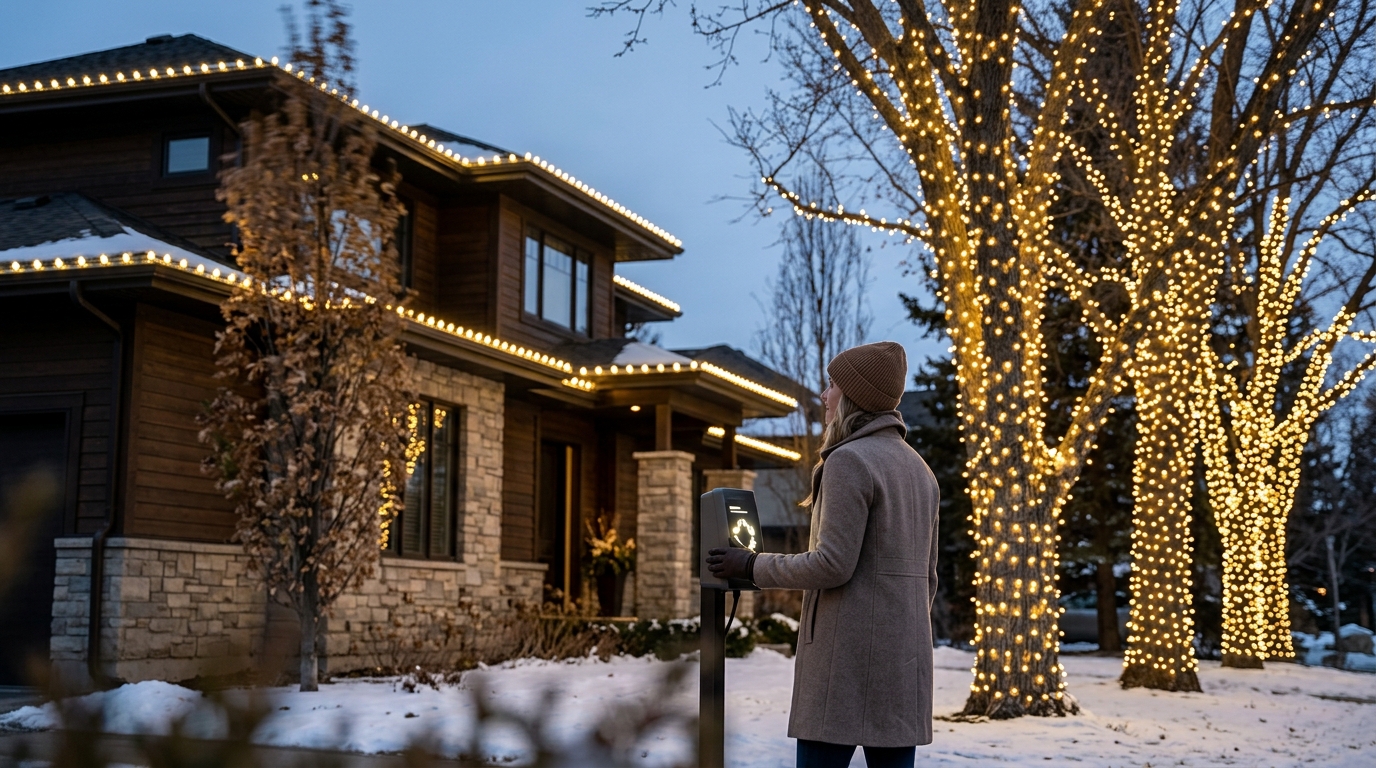
For a full property display, a combined strategy of gutter lights and wrapped trees is superior to choosing one over the other. Gutter lights define architectural lines, while wrapped trees add vertical volume and depth. This guide explains how to balance both elements for maximum visual impact and minimal maintenance burden. For additional details, review the .
Combined Display Strategy
Professional holiday lighting design is the process of arranging light strands to create a cohesive visual narrative across a property. Relying solely on one element often results in a flat or incomplete look. A robust display requires layering different light types to create depth and dimension. For additional details, review the Customer Experience.
The Role of Gutter Lights
Gutter lights are linear strands of lights installed along the roofline, eaves, and gutters. They serve as the skeleton of the display. By outlining the roof, they create a crisp, modern frame that draws the eye upward. This technique is essential for establishing the scale of the home. Without this architectural outline, the display lacks structure and appears random. For additional details, review the Frequently Asked Questions.
For properties with complex rooflines, gutter lights provide a clean, uniform edge. They are particularly effective on modern homes with sharp angles. The consistency of the light color and spacing along the gutter creates a sense of order. This structural foundation allows other elements to stand out without causing visual clutter.
The Role of Wrapped Trees
Tree wrapping is the technique of spiraling light strands around the trunk and branches of a tree. This method transforms a bare tree into a glowing pillar of light. It adds verticality to the display, which is crucial for balancing the horizontal lines of the roof. Wrapped trees act as focal points that break up the monotony of the house facade.
When combined with gutter lights, wrapped trees create a dynamic contrast. The linear precision of the roofline contrasts with the organic, voluminous glow of the trees. This interplay between geometric and organic shapes is the hallmark of a high-end display. It ensures that the property looks impressive from multiple angles, not just the front.
Integrating Both Elements
The most effective displays integrate both elements seamlessly. The gutter lights should match the color temperature of the tree wraps to maintain unity. If the roof is white, the trees should be white. If the roof is multicolor, the trees should be multicolor. This color consistency prevents the display from looking like two separate projects.
Spacing is also critical in a combined strategy. Trees should be positioned to complement the roofline, not obscure it. A well-placed tree can enhance the corner of a house, while a poorly placed one can block the view of the gutter lights. Professional designers map out these positions during the initial site visit to ensure optimal visibility.
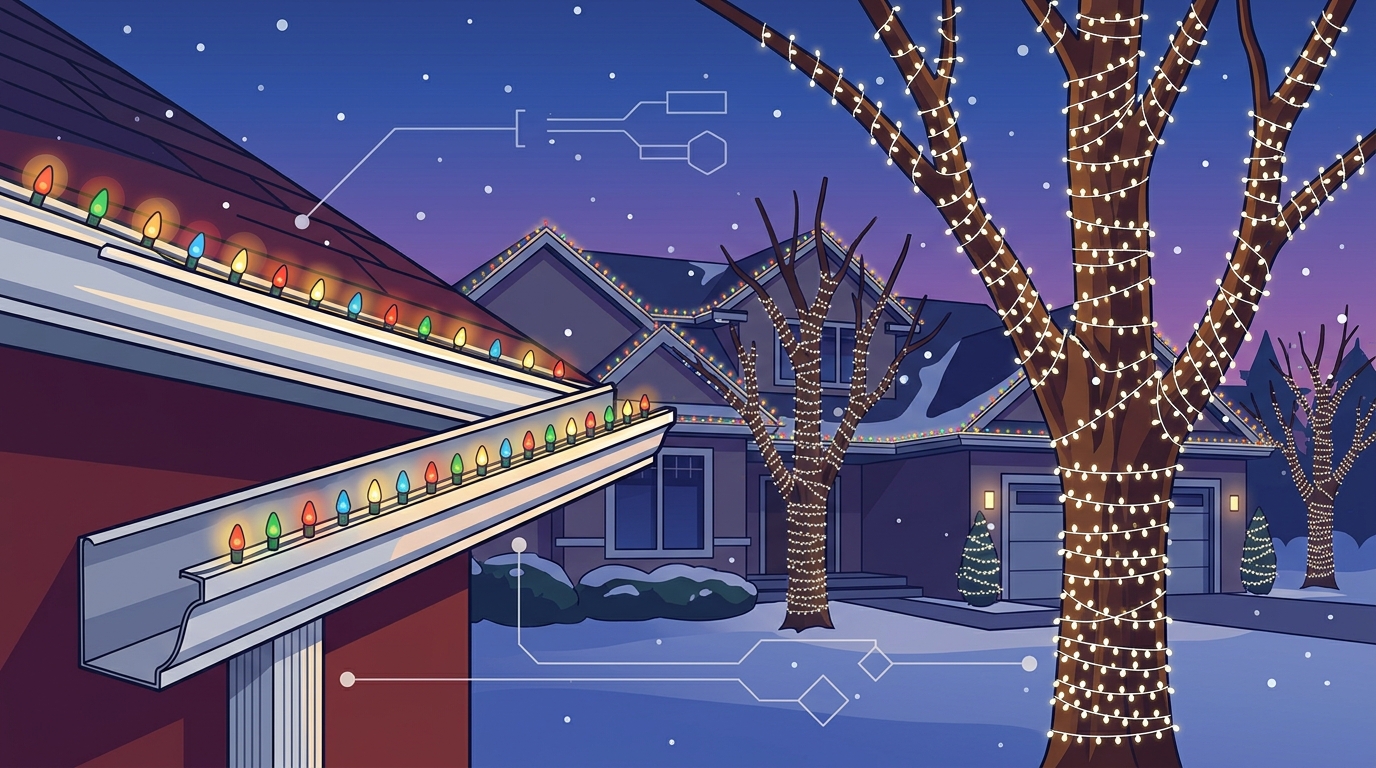
Labor Intensity Comparison
Understanding the effort required for each element helps homeowners decide whether to DIY or hire a professional. The labor intensity of holiday lighting installation is the amount of time, physical effort, and skill required to hang and secure lights safely. This metric varies significantly between gutter lights and wrapped trees.
Effort Required for Gutter Lights
Installing gutter lights requires working at height, typically on a ladder. This introduces safety risks that must be managed carefully. The process involves clipping lights to the gutter or fascia board. It is a repetitive task that requires precision to ensure even spacing. For a large home, this can take several hours of continuous work.
The physical demand is moderate but sustained. Homeowners must climb up and down ladders repeatedly. This is tiring and can be dangerous if proper safety protocols are not followed. Professional crews use specialized equipment and insurance to mitigate these risks. They can complete the installation faster and safer than a DIYer.
Effort Required for Wrapped Trees
Wrapping trees is physically less demanding in terms of height, but it requires more dexterity. The installer must navigate branches to create a uniform spiral. This is a detailed task that requires patience. It is difficult to achieve a professional look without experience. Uneven wrapping results in a patchy, unprofessional appearance.
The time commitment for tree wrapping is often underestimated. A single large tree can take an hour or more to wrap properly. If a property has multiple trees, the total time adds up quickly. Unlike gutter lights, which can be done in one long session, tree wrapping is often broken into smaller sessions. This makes it a project that spans several days for a DIYer.
Comparison Table
| Factor | Gutter Lights | Wrapped Trees |
|---|---|---|
| Primary Skill | Ladder Safety and Precision | Dexterity and Patience |
| Physical Risk | High (Falls from Height) | Low (Ground Level) |
| Time per Unit | Fast (Continuous Run) | Slow (Detailed Spiral) |
| DIY Difficulty | Medium to High | Medium |
| Visual Impact | Structural Frame | Vertical Focal Point |
For most homeowners, the combination of both elements exceeds the capacity of a single weekend project. Hiring a professional service like Radiant Holiday Designs eliminates the labor burden entirely. The company handles the ladders, the lights, and the takedown. This allows the homeowner to enjoy the season without the physical strain.
Key Takeaways
- A combined strategy of gutter lights and wrapped trees creates a more dynamic and professional display than either element alone.
- Gutter lights provide the structural frame, defining the roofline and architectural scale of the home.
- Wrapped trees add vertical volume and organic contrast, balancing the horizontal lines of the roof.
- Color consistency between gutter lights and tree wraps is essential for a cohesive look.
- Gutter light installation carries higher physical risk due to ladder work and height.
- Tree wrapping requires more dexterity and patience but is safer to perform at ground level.
- Professional installation services reduce safety risks and ensure a uniform, high-quality finish.
- Season-long maintenance is a key benefit of professional services, ensuring the display remains flawless.
Frequently Asked Questions
Can I use different colors for gutter lights and trees?
While possible, it is generally recommended to use the same color for both elements. Mixing colors can create a disjointed look. If you want variety, use a neutral color like white for the structure and a color for the trees, or vice versa. Consistency is key to a professional appearance.
How long does it take to install a full display?
Are gutter lights safe for my roof?
Yes, when installed correctly. Professional installers use clips that do not damage the gutter or fascia. They avoid drilling into the roof. Improper DIY installation can cause damage if nails are used or if the gutter is overloaded. Using proper clips is essential for safety and longevity.
Do wrapped trees look good on small properties?
Yes, but scale is important. On small properties, one or two well-wrapped trees can be very effective. Too many trees can overwhelm a small space. The goal is to balance the display with the size of the yard. A professional designer can help determine the right number of trees.
What happens if a bulb goes out?
With professional services, maintenance is often included. If a bulb goes out or a strand fails, the company will come fix it at no extra charge. For DIY installations, you must troubleshoot and replace bulbs yourself. This can be frustrating and time-consuming, especially late in the season.
Is it worth hiring a professional?
For most homeowners, yes. The cost of professional installation is often offset by the time saved and the superior quality of the finish. You avoid the physical strain and safety risks. Additionally, professional displays tend to last longer and look better, enhancing curb appeal throughout the season.
Conclusion
Choosing between gutter lights and wrapped trees is a false dichotomy. The best displays use both to create a layered, dynamic visual experience. Gutter lights provide the structure, while trees provide the volume. Together, they create a display that is both modern and festive.
At Radiant Holiday Designs, we handle the entire process from design to takedown. You buy the season, and we handle the ladders, the lights, and the maintenance. Reserve your date now to secure the best-looking house on the block.