Commercial Holiday Lighting: Permits, Codes, and Contractor Rules
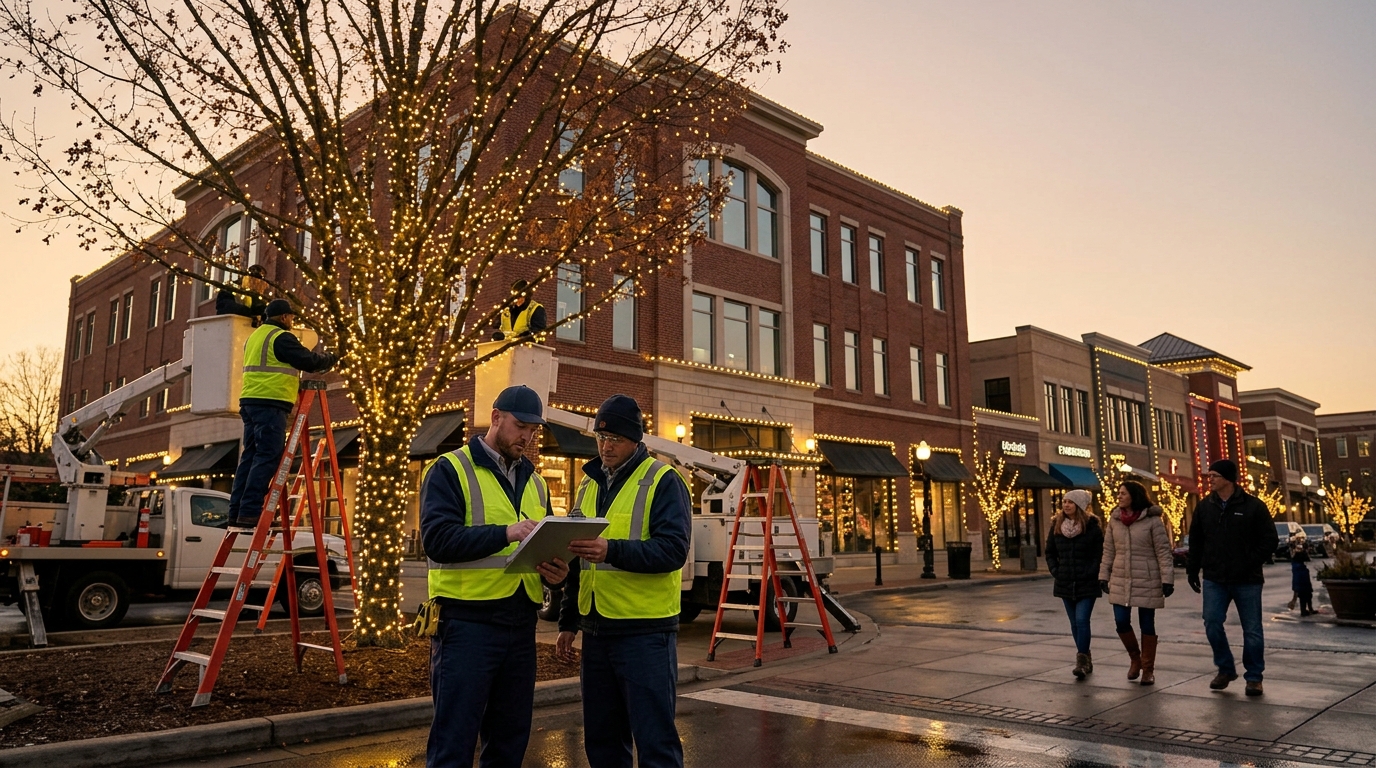
Yes, you can install lights on commercial properties, but you must navigate local electrical permits, building code compliance, and licensed contractor requirements. Radiant Holiday Designs handles these regulatory hurdles for commercial clients, ensuring your display is safe, legal, and visually impactful. This guide covers the three critical pillars of commercial holiday lighting: permit acquisition, code adherence, and professional installation standards. For additional details, review the .
Commercial Electrical Permits
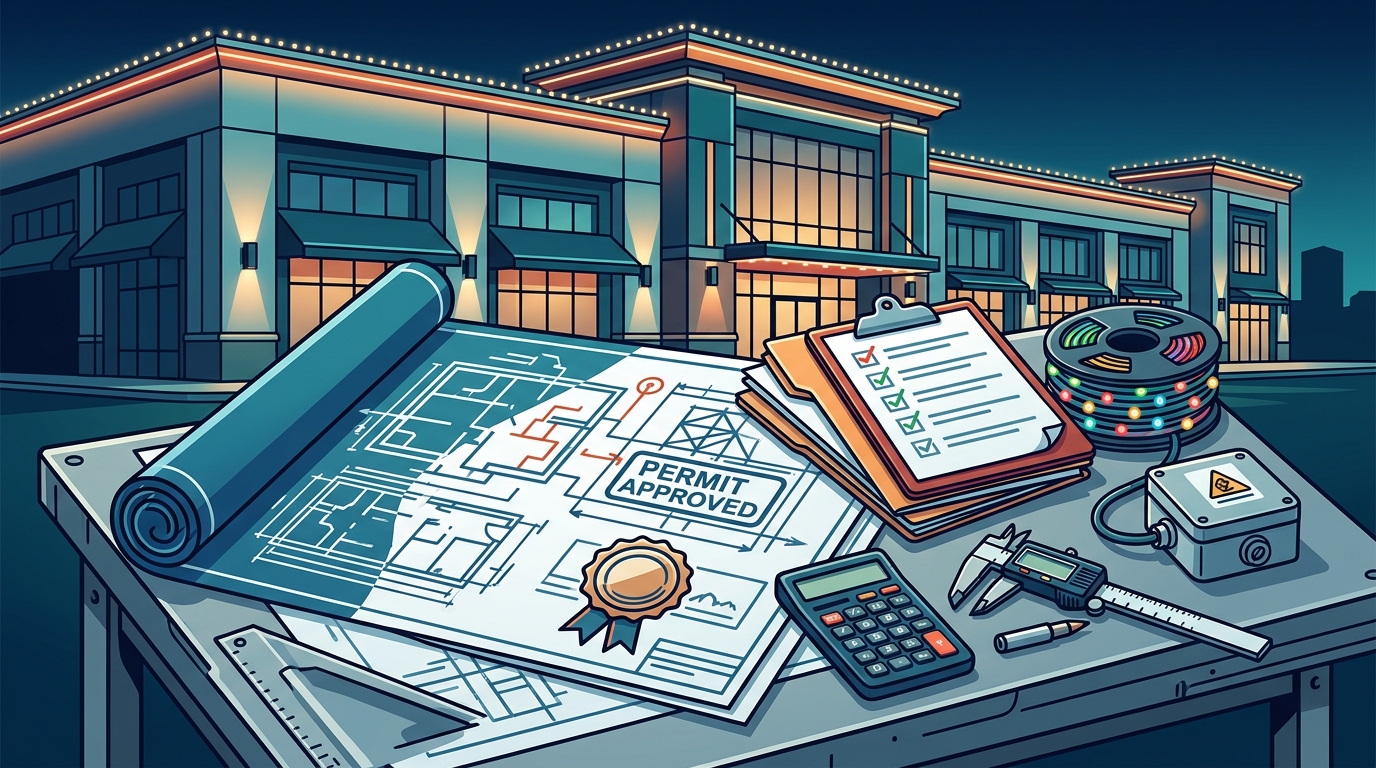
Commercial electrical permits are official authorizations issued by local authorities having jurisdiction (AHJ) that allow specific electrical work to proceed. Unlike residential holiday lighting, which often falls under temporary or minor work exemptions, commercial displays frequently trigger permit requirements due to scale, power draw, and public safety concerns. The primary reason for these permits is to ensure that the electrical load does not exceed the capacity of the building's service panel and that all connections meet safety standards. For additional details, review the Customer Experience.
When Permits Are Required
Permits are typically required when the installation involves new wiring, hardwired connections, or when the total amperage draw exceeds a certain threshold defined by local code. For example, a large retail storefront with extensive roofline lighting and facade illumination may require a permit because the cumulative load impacts the building's main electrical system. In contrast, a small office building using only plug-in strands on a dedicated circuit may not require a formal permit, though this varies significantly by municipality. For additional details, review the Frequently Asked Questions.
The Permit Process
Building Codes Compliance
Building codes compliance is the adherence to established safety standards that govern the construction, maintenance, and operation of buildings. For holiday lighting, this primarily involves the National Electrical Code (NEC) and local amendments. The NEC provides the baseline for safe electrical practices, including wire sizing, grounding, and protection against overcurrent. Local building codes may add specific requirements for fire safety, structural load, and accessibility. For additional details, review the About.
NEC Standards for Temporary Lighting
Fire Safety and Structural Considerations
Fire safety is a critical aspect of code compliance. Holiday lighting must be installed in a way that does not create a fire hazard, such as by avoiding contact with combustible materials or by using non-combustible mounting hardware. Structural considerations also come into play, particularly for roof-mounted displays. The weight of the lighting system must be evaluated to ensure it does not exceed the roof's load capacity. Radiant Holiday Designs conducts thorough site assessments to identify potential code violations and implements solutions that ensure full compliance.
Licensed Contractor Requirements
Licensed contractor requirements are the legal mandates that specify who is authorized to perform electrical work on commercial properties. In most jurisdictions, electrical work on commercial buildings must be performed by a licensed electrician or a licensed electrical contractor. This requirement exists to ensure that the work is performed by individuals with the necessary training, experience, and knowledge of local codes.
Why Licensing Matters
Using an unlicensed contractor for commercial holiday lighting can result in significant legal and financial consequences. If an unlicensed installation causes a fire or electrical fault, the property owner may be held liable for damages and injuries. Additionally, insurance companies may deny claims if the work was not performed by a licensed professional. Licensing also ensures that the contractor carries the necessary insurance and bonds, providing an additional layer of protection for the property owner.
Verifying Contractor Credentials
Before hiring a contractor, it is essential to verify their licensing status. This can typically be done through the state or local licensing board's website. A legitimate contractor will provide their license number and proof of insurance upon request. Radiant Holiday Designs is fully licensed and insured, ensuring that all commercial installations meet the highest standards of professionalism and safety. Our team is trained in commercial electrical practices and stays current with the latest code updates and industry best practices.
| Factor | Residential Lighting | Commercial Lighting |
|---|---|---|
| Permit Requirements | Often exempt for minor work | Frequently required for scale and load |
| Code Complexity | Basic NEC compliance | NEC plus local fire and structural codes |
| Contractor Licensing | Varies by jurisdiction | Strictly required in most areas |
| Liability Risk | Lower, but present | Higher due to public access and scale |
Key Takeaways
- Commercial holiday lighting often requires electrical permits due to scale and power draw.
- Building code compliance involves adhering to NEC standards for wiring, grounding, and fire safety.
- Licensed contractors are legally required for most commercial electrical work in the USA.
- Using unlicensed contractors can void insurance coverage and increase liability.
- Permit processes can take weeks, so early planning is essential.
- Structural load and fire safety are critical considerations for roof-mounted displays.
- Radiant Holiday Designs manages permits, code compliance, and licensed installation for commercial clients.
Frequently Asked Questions
Do I need a permit for commercial holiday lights?
It depends on the scale and complexity of the installation. Large displays that impact the building's electrical system often require a permit, while smaller plug-in setups may not. Local regulations vary, so it is best to consult with a licensed professional.
What are the main building code requirements for holiday lighting?
Why must I use a licensed contractor for commercial lighting?
Licensed contractors are legally required to perform electrical work on commercial properties in most jurisdictions. They ensure code compliance, carry insurance, and reduce liability risks for the property owner.
How long does the permit process take?
The permit process can take anywhere from a few days to several weeks, depending on the local authority and the complexity of the installation. Early submission of plans is recommended to avoid delays.
What happens if I use an unlicensed contractor?
Using an unlicensed contractor can result in legal penalties, voided insurance coverage, and increased liability in the event of an accident or fire. It is a significant risk that should be avoided.
Does Radiant Holiday Designs handle permits for commercial clients?
Yes, Radiant Holiday Designs manages the entire permit process, including plan preparation and coordination with local authorities, ensuring that your installation is approved and compliant.
Are there specific fire safety rules for commercial displays?
How does Radiant Holiday Designs ensure code compliance?
Conclusion
Installing lights on commercial properties is a complex process that requires careful attention to permits, building codes, and contractor licensing. By understanding these requirements and working with a professional team, you can ensure that your holiday display is safe, legal, and visually stunning. Radiant Holiday Designs provides end-to-end solutions for commercial clients, handling everything from design and permitting to installation and maintenance. To discuss your commercial lighting needs, contact Radiant Holiday Designs for a free consultation.