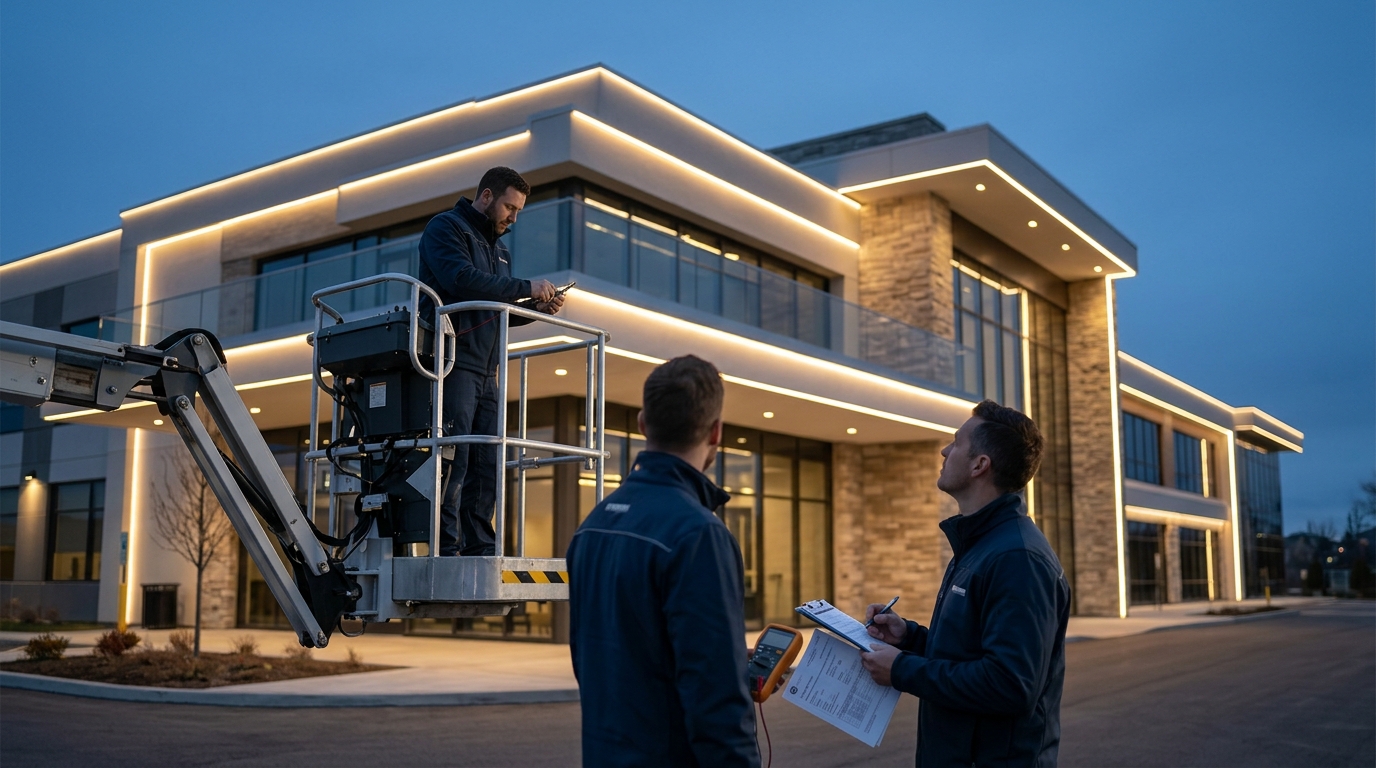
Commercial Holiday Light Installation: Permits, Codes, and Licensing
Yes, you can install lights on commercial properties, provided the work complies with local electrical codes, building regulations, and licensing requirements. Commercial installations differ significantly from residential projects due to higher voltage loads, complex rooflines, and strict liability standards. This guide covers the essential regulatory framework for commercial holiday lighting, including permit processes, code compliance, and the necessity of licensed contractors. We will examine how professional firms like Radiant Holiday Designs navigate these requirements to ensure safe, code-compliant displays for businesses. For additional details, review the .
Commercial Electrical Permits
Commercial electrical permits are official authorizations issued by local building departments that allow specific electrical work to proceed on a commercial property. Unlike residential holiday lighting, which often falls under minor temporary wiring exemptions, commercial installations frequently trigger permit requirements due to the scale of the project and the potential impact on the building's main electrical service. The primary driver for a permit is the modification of existing electrical infrastructure or the addition of significant load to the system. For additional details, review the Frequently Asked Questions.
When Permits Are Required
Permits are typically mandatory when the installation involves tapping into the main service panel, installing new conduit runs, or adding dedicated circuits for the holiday display. If the lights are plugged into existing, code-compliant outlets without altering the wiring, a permit may not be required. However, many jurisdictions require a permit for any temporary electrical installation that exceeds a certain wattage or amperage threshold. This ensures that the temporary load does not overload the building's electrical system, which could pose a fire hazard. For additional details, review the About.
The Permit Process
The process generally involves submitting a plan set to the local building department, paying a fee, and scheduling an inspection. The plan must detail the location of the lights, the type of wiring used, and the circuit load calculations. Once the work is complete, an inspector will verify that the installation meets all code requirements. Failure to obtain a required permit can result in fines, forced removal of the lights, or complications during future property sales or renovations. Professional firms handle this administrative burden, ensuring that all necessary paperwork is filed and inspections are passed.
Building Codes Compliance
Building codes compliance is the adherence to local, state, and national regulations governing the safety and construction of buildings, including temporary electrical installations. For holiday lighting, the primary reference is the National Electrical Code (NEC), which is adopted by most jurisdictions with local amendments. The NEC provides specific guidelines for temporary wiring, including the use of approved materials, proper grounding, and protection against environmental factors.
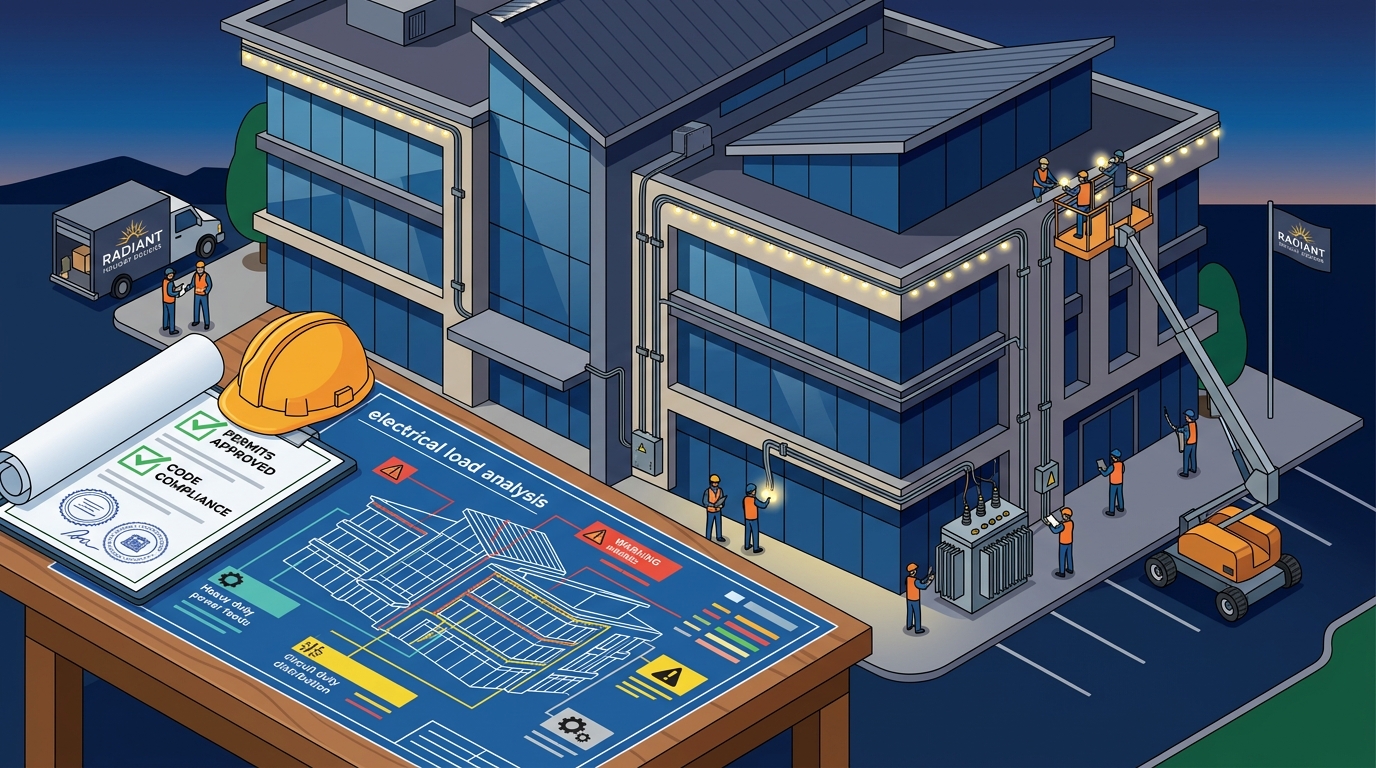
NEC Standards for Temporary Lighting
The NEC classifies holiday lighting as temporary wiring, which has specific rules regarding installation and duration. Temporary wiring must be installed in a neat and workmanlike manner and must be removed when no longer needed. The code also specifies the type of wire and cable that can be used, requiring that it be rated for the environment (e.g., wet or dry location) and the voltage of the system. For commercial properties, the code often requires that temporary circuits be protected by a ground-fault circuit interrupter (GFCI) to prevent electrocution in wet conditions.
Fire Safety and Materials
Fire safety is a critical component of code compliance. All lighting fixtures, wires, and clips must be UL-listed or equivalent, meaning they have been tested and certified by a recognized testing laboratory. Using non-certified products can void insurance coverage and violate code. Additionally, the installation must not obstruct emergency exits, fire hydrants, or other safety equipment. The clearance between the lights and combustible materials, such as roof shingles or wooden eaves, must meet code minimums to prevent heat buildup and fire risk.
Licensed Contractor Requirements
Licensed contractor requirements are the legal mandates that specify who is authorized to perform electrical work on a commercial property. In most jurisdictions, electrical work, including the installation of holiday lighting that involves wiring, must be performed by a licensed electrician or a licensed electrical contractor. This requirement exists to ensure that the work is performed safely and in compliance with code, protecting the property owner, the public, and the contractor.
Why Licensing Matters for Commercial Properties
Commercial properties carry higher liability than residential homes. A faulty installation can lead to fire, electrocution, or property damage, resulting in significant legal and financial consequences. Hiring an unlicensed individual to perform electrical work can void the property owner's insurance policy and expose them to personal liability. Licensed contractors carry liability insurance and workers' compensation, which protects the property owner from claims arising from accidents or damages during the installation. Furthermore, licensed contractors are required to stay current with code changes and continue their education, ensuring that their practices are up-to-date and safe.
Verifying Contractor Credentials
Before hiring a contractor, property owners should verify their license status with the state or local licensing board. This can typically be done online through the board's website. The owner should also request proof of insurance, including general liability and workers' compensation. A reputable firm will provide this documentation readily. Additionally, the owner should ask about the contractor's experience with commercial holiday lighting, as this is a specialized area that requires knowledge of both electrical codes and aesthetic design. Radiant Holiday Designs, for example, employs insured crews and adheres to all licensing and code requirements, ensuring that commercial clients are protected throughout the process.
Comparison of Residential vs. Commercial Requirements
| Factor | Residential Holiday Lighting | Commercial Holiday Lighting |
|---|---|---|
| Permit Requirement | Often exempt for minor temporary wiring | Frequently required for significant loads or wiring modifications |
| Code Complexity | Basic NEC temporary wiring rules | Strict NEC compliance, local amendments, and fire safety codes |
| Licensing | May allow unlicensed DIY or general contractors | Requires licensed electrical contractor in most jurisdictions |
| Liability | Lower, typically covered by homeowner's insurance | Higher, requires commercial liability insurance and workers' comp |
| Inspection | Rarely inspected | Often requires final inspection by building department |
Key Takeaways
- Commercial holiday lighting often requires electrical permits, especially when modifying wiring or adding significant load.
- Building codes, primarily the NEC, dictate the use of certified materials, proper grounding, and GFCI protection.
- Licensed contractors are legally required in most areas to perform electrical work on commercial properties.
- Using unlicensed workers can void insurance coverage and expose property owners to liability.
- Professional firms handle permits, code compliance, and licensing, reducing risk for business owners.
- Fire safety is a critical code requirement, mandating UL-listed products and proper clearances.
- Verification of contractor credentials, including license and insurance, is essential before hiring.
- Commercial installations differ from residential in scale, complexity, and regulatory scrutiny.
Frequently Asked Questions
Do I need a permit for commercial holiday lights?
It depends on the scope of the installation. If the lights are plugged into existing outlets without wiring changes, a permit may not be required. However, if the installation involves new wiring, tapping into the main panel, or exceeding a certain wattage, a permit is likely required. Local building departments can provide specific guidance based on your jurisdiction.
What happens if I install lights without a permit?
Installing lights without a required permit can result in fines, forced removal of the lights, and complications during future property transactions. It can also void your insurance coverage if a fire or accident occurs. Always check with your local building department to determine if a permit is needed.
Who can install holiday lights on a commercial property?
In most jurisdictions, electrical work on commercial properties must be performed by a licensed electrical contractor. This ensures that the work is done safely and in compliance with code. Hiring an unlicensed individual can expose you to liability and void your insurance.
What are the main code requirements for commercial holiday lighting?
How do I verify a contractor's license?
You can verify a contractor's license through your state or local licensing board's website. You should also request proof of insurance, including general liability and workers' compensation. A reputable firm will provide this documentation readily.
Does Radiant Holiday Designs handle permits and inspections?
Yes, Radiant Holiday Designs handles the entire process, including permit applications, code compliance, and inspections. Our insured crews ensure that all work meets local and national standards, providing peace of mind for commercial clients.
Conclusion
Installing lights on commercial properties is a regulated process that requires attention to permits, building codes, and licensing. By understanding these requirements and hiring a qualified, licensed contractor, business owners can ensure a safe, code-compliant, and visually stunning holiday display. Radiant Holiday Designs specializes in commercial holiday lighting, handling all aspects of the process from design to takedown. To plan your commercial installation, for a free design quote and ensure your property is ready for the season.