
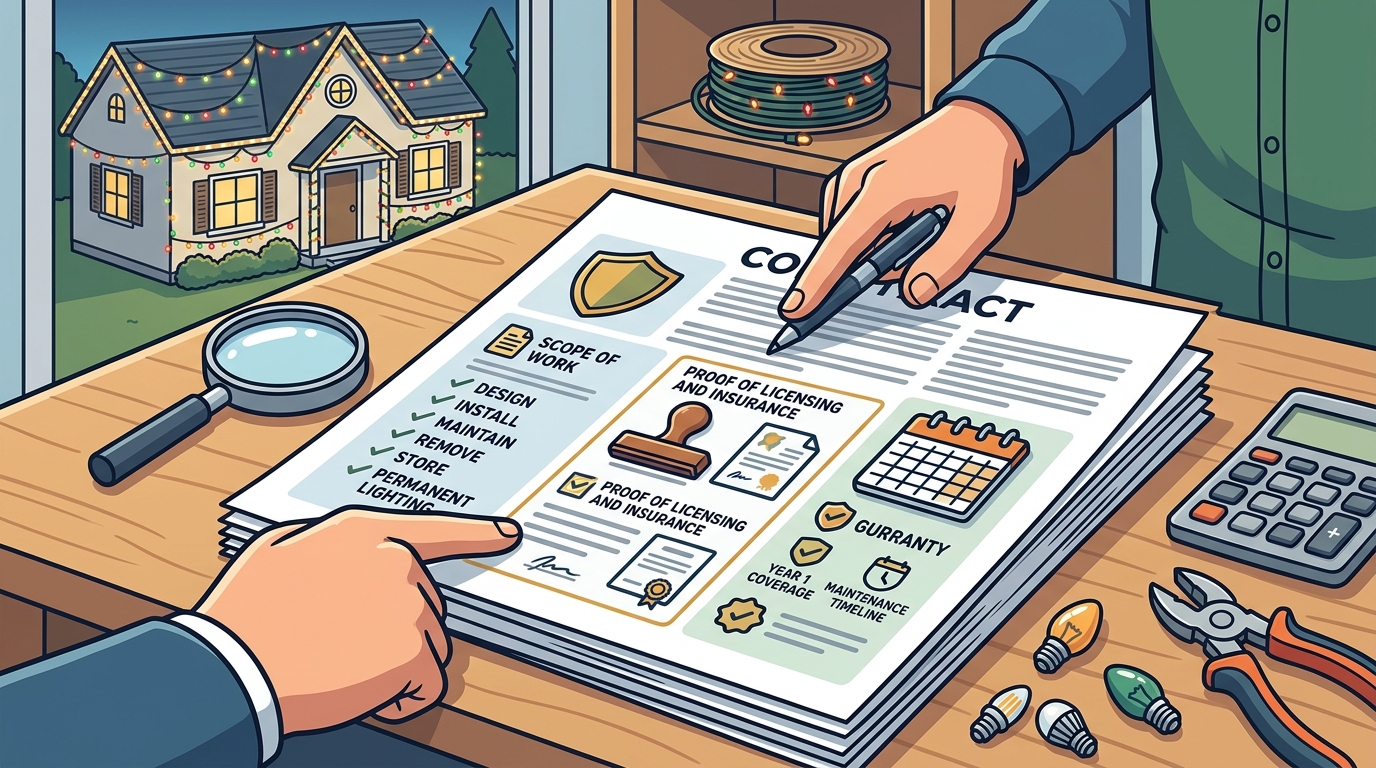
Homeowners should verify the scope of work, warranty terms, and proof of licensing and insurance in any holiday lighting service contract. These three elements protect your property, ensure professional installation, and clarify financial responsibilities. Radiant Holiday Designs provides this guide to help you navigate the details that matter most when hiring a professional lighting team. For additional details, review the radiantholidaydesignsllc com.
Scope of Work
The scope of work is the detailed description of the specific tasks the provider will perform, including installation, maintenance, and removal. It defines exactly what is included in the service and what is excluded. A vague scope leads to disputes, while a precise scope ensures both parties understand the deliverables. For additional details, review the .
Installation and Design Details
Maintenance and Storage Responsibilities
Removal and Takedown Procedures
The removal process is as important as the installation. The contract should specify when the lights will be taken down. It should also describe the method of removal to ensure no damage to your roof or siding. A clear takedown schedule helps you plan for the end of the holiday season. This section of the scope of work protects your property from potential damage during the removal process. For additional details, review the Customer Experience.
Warranties
A warranty is a guarantee provided by the service provider that the work will meet certain standards for a specified period. It protects you from defects in materials or workmanship. Understanding the warranty terms is essential for long-term satisfaction with your holiday lighting. For additional details, review the Frequently Asked Questions.
Workmanship Guarantees
Workmanship warranties cover the quality of the installation. If lights fall off or wires are exposed due to poor installation, the provider should fix it at no cost. The contract should specify the duration of this warranty. Typically, workmanship warranties last for the duration of the season or a specific number of years. This ensures that the professional installation remains secure and safe. For additional details, review the About.
Equipment and Fixture Coverage
Equipment warranties cover the physical lights and fixtures. If a string of lights fails due to a manufacturing defect, the provider should replace it. The contract should clarify whether the warranty covers all fixtures or only specific types. It should also state the process for claiming a warranty repair. This coverage is vital for maintaining the aesthetic and functional quality of your display.
Liability for Damage
The contract should address liability for any damage to your property during the service. If the provider accidentally damages your roof or siding, who is responsible for the repair? A clear liability clause protects you from unexpected costs. It also demonstrates the provider's confidence in their work. Radiant Holiday Designs ensures that all work is performed with care and professionalism, minimizing the risk of damage.
Licensing and Insurance
Licensing and insurance are legal requirements that protect both the homeowner and the service provider. Verifying these credentials ensures that you are hiring a legitimate and responsible business. It also protects you from liability in case of accidents or injuries.
Business Licensing
Business licensing is the official permission granted by local or state authorities to operate a business. The provider should be able to provide a copy of their business license. This ensures that they are a registered and legal entity. It also allows you to verify their standing with local authorities. A licensed business is more likely to adhere to professional standards and regulations.
General Liability Insurance
Workers' Compensation
Workers' compensation is a type of insurance that provides benefits to employees who are injured on the job. The provider should have workers' compensation insurance for all their employees. This ensures that you are not held liable for medical expenses or lost wages if a worker is injured while working on your property. Verifying this coverage is a critical step in protecting yourself from legal and financial risks.
| Contract Element | Key Verification Points | Why It Matters |
|---|---|---|
| Scope of Work | Specific tasks, zones, fixtures, and schedules | Prevents disputes and ensures clear expectations |
| Warranties | Workmanship, equipment, and liability terms | Protects against defects and damage |
| Licensing | Valid business license and registration | Ensures legal and professional operation |
| Insurance | General liability and workers' compensation | Protects against accidents and injuries |
Key Takeaways
- Verify the scope of work to ensure all tasks, including installation, maintenance, and removal, are clearly defined.
- Check warranty terms for both workmanship and equipment to protect against defects and damage.
- Confirm that the provider holds a valid business license to ensure legal operation.
- Require proof of general liability insurance to protect against property damage or injury.
- Verify workers' compensation coverage to avoid liability for employee injuries.
- Ensure the contract specifies the type of lighting and fixtures to be used.
- Clarify the schedule for installation and removal to plan for the holiday season.
- Review liability clauses to understand who is responsible for any damage to your property.
Frequently Asked Questions
What is the most important part of a lighting service contract?
The scope of work is the most important part. It defines exactly what services will be provided and what is excluded. A clear scope prevents misunderstandings and ensures that both parties are on the same page.
Do I need to verify the provider's insurance?
What should be included in the scope of work?
How long should a workmanship warranty last?
A workmanship warranty typically lasts for the duration of the season or a specific number of years. The exact duration should be specified in the contract. This ensures that the installation remains secure and safe.
What is general liability insurance?
General liability insurance is a policy that covers third-party claims for bodily injury or property damage. It protects you if a worker is injured on your property or if your property is damaged during the installation.
Can I customize the scope of work?
Yes, you can customize the scope of work to fit your specific needs. Work with the provider to define the exact tasks and services you want. This ensures that the contract reflects your expectations and requirements.
What happens if the provider damages my property?
If the provider damages your property, the liability clause in the contract will determine who is responsible for the repair. A clear liability clause protects you from unexpected costs. It also demonstrates the provider's confidence in their work.
How do I verify the provider's business license?
You can verify the provider's business license by asking for a copy of the license. You can also check with local or state authorities to confirm that the license is valid and in good standing. This ensures that you are hiring a legitimate and responsible business.
Conclusion
Verifying the scope of work, warranties, and licensing and insurance in a holiday lighting service contract is essential for protecting your property and ensuring a professional experience. By taking the time to review these details, you can avoid disputes and ensure that your holiday display is installed and maintained to the highest standards. Radiant Holiday Designs is committed to providing transparent and professional services that meet your expectations. To learn more about our services and to discuss your holiday lighting needs, visit our homepage. Learn more: radiantholidaydesignsllc com.