
Homeowner's Guide to Verifying Holiday Lighting Service Contracts
Homeowners should verify liability coverage, installation safety standards, and clear removal timelines in any holiday lighting service contract. This guide details the specific clauses, credentials, and operational workflows that separate professional providers from risky amateurs. It covers how to evaluate service scope, verify insurance, understand pricing drivers, and protect your property during the holiday season. For additional details, review the .
How to Choose a Provider
Choosing a holiday lighting company is not just about aesthetics; it is about risk management. A professional provider is a licensed business entity that assumes liability for property damage and personal injury during installation. You must distinguish between a casual individual with a ladder and a structured company with insured crews. The core difference lies in the operational infrastructure. A reliable firm designs custom displays based on your specific rooflines and architecture, rather than using a one-size-fits-all template. They utilize commercial-grade equipment and custom clips to ensure safety. This level of specialization indicates a business that understands the technical demands of outdoor electrical work. For additional details, review the Customer Experience.
Operational Infrastructure
Design Philosophy
Examine the company's approach to design. Do they offer a free on-site design consultation? This step is critical because it allows the provider to assess your property's unique features. They should create a custom display built for your rooflines, trees, and architecture. This personalized approach ensures the final result complements your home rather than overwhelming it. It also demonstrates a commitment to quality and attention to detail. For additional details, review the Frequently Asked Questions.
Questions to Ask Before Signing
Before committing to a contract, you must ask specific questions that reveal the provider's operational standards. These questions help you identify potential gaps in their service or liability coverage. Do not accept vague answers. You need concrete details about their processes and protections.
Liability and Insurance
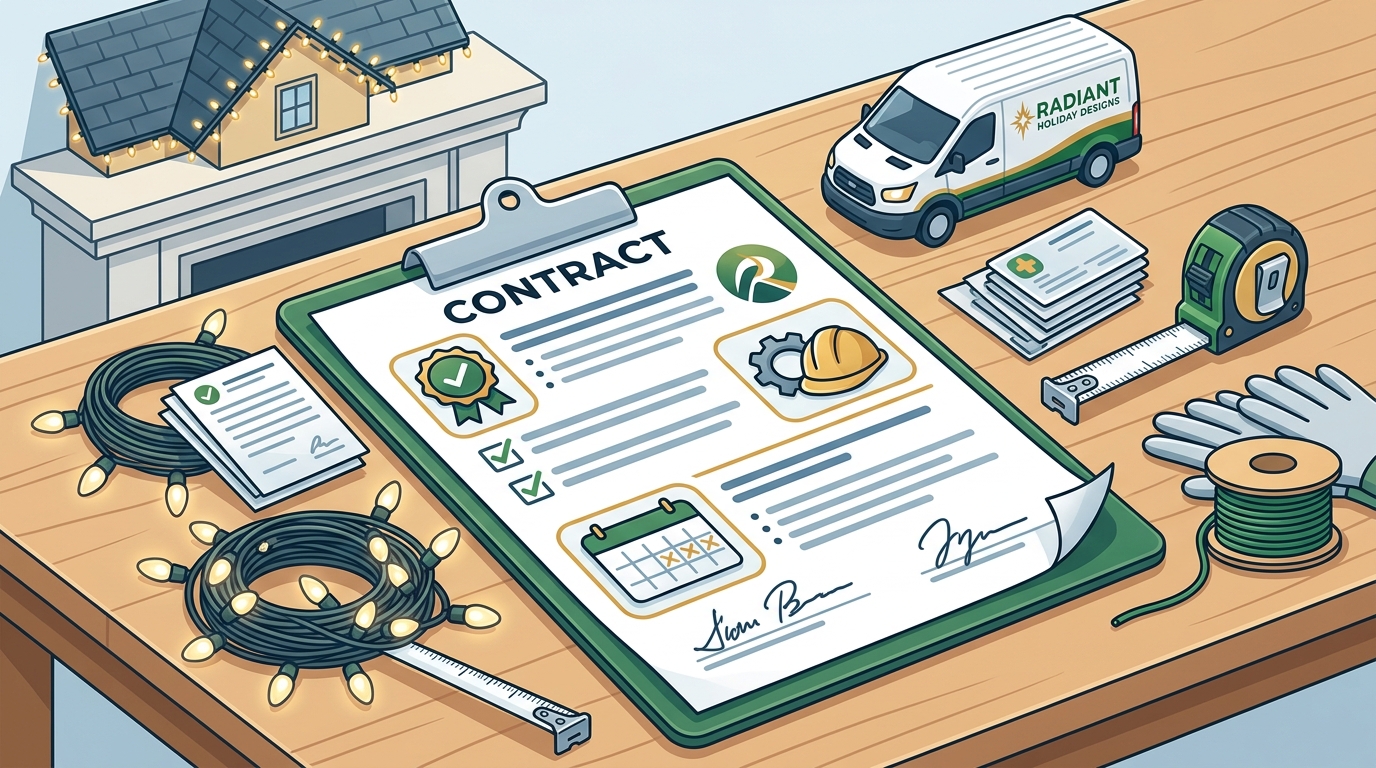
Ask for a certificate of insurance that names you as an additional insured. This document proves they carry general liability coverage. Ask specifically about the coverage limits. You also need to know if they carry workers' compensation. This protects you from liability if an employee is injured on your property. If they cannot provide these documents, do not sign the contract.
Installation and Safety
Inquire about the specific methods used to secure lights. Do they use commercial-grade clips? Are the clips designed to prevent damage to shingles or siding? Ask how they manage electrical load. Do they use surge protectors? How do they ensure the wiring is hidden and safe? These details indicate their technical competence and commitment to safety.
Removal and Storage
Ask about the takedown process. When do they remove the lights? Do they store them for you? If they store them, where are they kept? Are they protected from the elements? Understanding the storage process ensures your investment is safe for the next season. It also clarifies their responsibility for the equipment.
Verifying Credentials and Claims
Verifying a provider's credentials is a critical step in protecting your property. You must confirm that the claims made in their marketing materials are accurate. This involves checking their business registration, insurance, and professional affiliations.
Business Registration
Check the state business registry to confirm the company is legally registered. This ensures they are a legitimate entity and not an unregistered individual. You can also check for any past complaints or legal actions. This due diligence helps you avoid working with a business that has a history of disputes.
Insurance Verification
Do not rely solely on the certificate of insurance provided by the company. Contact the insurance agent directly to verify the policy is active and covers the specific dates of installation. This step ensures the coverage is valid when the work is performed. It also confirms the coverage limits meet your requirements.
Professional Affiliations
Check if the company is a member of any professional associations. While not always mandatory, membership in industry groups can indicate a commitment to best practices. It also provides a channel for resolving disputes if they arise. Look for reviews and testimonials from past clients to gauge their reputation.
The Service Workflow
Understanding the service workflow helps you set realistic expectations and plan your schedule. A professional provider follows a structured process that ensures a smooth experience. This process typically involves four key stages.
Design and Planning
The process begins with a free on-site design consultation. The provider walks your property and assesses your rooflines, trees, and architecture. They create a custom display plan that you approve before any work begins. This step ensures the final result meets your expectations.
Installation
Once the design is approved, the installation phase begins. The crew arrives with commercial-grade lights and custom clips. They hang the lights safely and precisely, ensuring minimal disruption to your daily life. The installation is typically completed in a single day, depending on the size of the display.
Maintenance and Takedown
After installation, the provider offers season-long maintenance. They check for burnt-out bulbs and make necessary repairs. At the end of the season, they remove the lights and store them for the next year. This takedown process ensures your property is left in its original condition.
Understanding Cost Drivers
The cost of professional holiday lighting varies based on several factors. Understanding these drivers helps you budget effectively and avoid unexpected charges. The primary cost drivers are the size of the display, the complexity of the design, and the type of lights used.
Display Size and Complexity
Larger homes with more rooflines and trees require more lights and labor. This increases the cost. Complex designs that involve custom shapes or animations also cost more. Simple, uniform displays are generally less expensive. The provider should provide a detailed quote that breaks down these costs.
Light Type and Quality
Service Scope
Common Mistakes to Avoid
Homeowners often make mistakes when hiring a holiday lighting provider. These mistakes can lead to property damage, safety hazards, or financial loss. Avoiding these common pitfalls ensures a positive experience.
Skipping Insurance Verification
One of the most common mistakes is failing to verify the provider's insurance. If an uninsured worker damages your roof or is injured on your property, you could be held liable. Always request and verify a certificate of insurance before signing a contract.
Vague Contracts
Another mistake is signing a contract with vague terms. The contract should clearly outline the scope of work, timeline, and liability. It should also specify what happens if the provider fails to meet their obligations. Avoid contracts that lack these details.
Ignoring Maintenance
Many homeowners neglect the maintenance aspect of the service. If the provider does not offer maintenance, you are responsible for checking and repairing the lights. This can be time-consuming and risky. Choose a provider that offers season-long maintenance to ensure your display remains safe and attractive.
Professional Service vs. DIY
Deciding between a professional service and a do-it-yourself (DIY) approach depends on your skills, time, and risk tolerance. Both options have their pros and cons. Understanding these differences helps you make an informed decision.
| Factor | Professional Service | DIY |
|---|---|---|
| Cost | Higher upfront cost | Lower upfront cost, but higher long-term risk |
| Time | Minimal time required from homeowner | Significant time required for installation and maintenance |
| Safety | Insured and trained professionals | Homeowner assumes all safety risks |
| Quality | Commercial-grade equipment and custom design | Depends on homeowner's skills and equipment |
| Liability | Provider assumes liability for damage and injury | Homeowner assumes all liability |
Special Property Scenarios
Certain property types require special considerations when hiring a holiday lighting provider. Understanding these scenarios helps you choose the right provider and set realistic expectations.
Historic Homes
HOA Communities
Homeowners' associations (HOAs) often have strict rules about exterior decorations. You must ensure the provider's design complies with your HOA guidelines. The provider should be willing to work with your HOA to get approval for the display. This step ensures you avoid fines or conflicts with your neighbors.
Large Properties
Large properties with multiple structures require a more complex installation. The provider must have the equipment and staff to handle the scale of the project. They should provide a detailed plan that outlines how they will manage the installation across multiple buildings. This ensures a cohesive and safe display.
Legal Protections and Rules
Liability and Indemnification
Safety Regulations
Providers must comply with local safety regulations, including electrical codes and fire safety standards. They should use approved equipment and follow best practices for installation. You can verify their compliance by asking for documentation of their safety protocols. This ensures your display is safe and legal.
Consumer Protection
Consumer protection laws provide you with rights regarding the quality of services and the accuracy of representations. If the provider fails to deliver the agreed-upon service, you may have legal recourse. Understanding these laws helps you hold the provider accountable and resolve disputes effectively.
Local Installation Considerations
Local conditions can significantly impact the installation and maintenance of holiday lighting. Understanding these factors helps you choose a provider that is familiar with your area.
Weather Conditions
Local weather patterns, such as heavy snow or high winds, can affect the durability of the display. The provider should use equipment that is rated for your local climate. They should also have a plan for maintaining the display during severe weather. This ensures your lights remain safe and functional throughout the season.
Local Regulations
Some municipalities have specific regulations regarding holiday lighting, such as brightness limits or installation deadlines. The provider should be familiar with these rules and ensure your display complies. This avoids potential fines or conflicts with local authorities. You can ask the provider about their experience with local regulations.
Provider Availability
Local providers often have a better understanding of the specific needs of your area. They may also have a shorter response time for maintenance and repairs. Choosing a local provider can improve the overall quality and reliability of the service. Look for providers that have a strong presence in your community.
Optimal Timing for Booking
Timing is a critical factor in securing a professional holiday lighting service. Booking early ensures you get the best design and installation slot. It also allows the provider to plan their schedule effectively.
Booking Deadlines
Installation slots often fill up quickly, especially in popular areas. Many providers require bookings by mid-November to ensure timely installation. You should book as early as possible to secure your preferred date. Waiting until the last minute can result in limited availability or higher costs.
Design Approval
Allow sufficient time for the design and approval process. This step ensures the final display meets your expectations. It also allows the provider to order any custom materials needed for the installation. Rushing this process can lead to compromises in quality or design.
Seasonal Demand
Long-Term Outcomes
Choosing a professional holiday lighting service offers long-term benefits that extend beyond a single season. These outcomes include consistent quality, reduced risk, and enhanced property value.
Consistent Quality
Professional providers use commercial-grade equipment and follow strict quality standards. This ensures your display looks its best every year. They also maintain the lights throughout the season, ensuring they remain bright and attractive. This consistency is difficult to achieve with DIY methods.
Reduced Risk
Professional providers assume liability for damage and injury, reducing your risk. They also follow safety regulations and best practices, ensuring your display is safe. This protection is invaluable, especially for homeowners with valuable properties or families with young children.
Enhanced Property Value
A well-designed and maintained holiday display can enhance the curb appeal of your property. It can also increase its perceived value, especially if you plan to sell in the future. A professional display demonstrates care and attention to detail, which can impress potential buyers. This long-term benefit makes the investment in a professional service worthwhile.
Key Takeaways
- Verify the provider's insurance and liability coverage before signing a contract.
- Ask specific questions about installation methods, safety, and removal processes.
- Check the provider's business registration and professional affiliations.
- Understand the service workflow, including design, installation, maintenance, and takedown.
- Consider the cost drivers, such as display size, complexity, and light type.
- Avoid common mistakes like skipping insurance verification or signing vague contracts.
- Compare professional services with DIY options based on cost, time, and risk.
- Book early to secure your preferred date and take advantage of early booking discounts.
Frequently Asked Questions
What is the most important clause in a lighting service contract?
The most important clause is the liability and indemnification clause. It specifies who is responsible for damage or injury and protects you from claims arising from the provider's negligence.
How do I verify a provider's insurance?
Request a certificate of insurance and contact the insurance agent directly to verify the policy is active and covers the specific dates of installation.
What is the difference between a professional service and DIY?
When should I book my holiday lighting service?
Book as early as possible, ideally by mid-November, to secure your preferred date and take advantage of early booking discounts.
What are the common mistakes homeowners make?
How does local weather affect the installation?
Local weather patterns can affect the durability of the display. The provider should use equipment rated for your local climate and have a plan for maintaining the display during severe weather.
Conclusion
Verifying a holiday lighting service contract is a critical step in protecting your property and ensuring a safe, attractive display. By following the guidelines in this article, you can choose a reliable provider, understand the service workflow, and avoid common mistakes. Radiant Holiday Designs offers a full-service approach that handles the ladders, the lights, and the takedown, allowing you to enjoy the season without the hassle. To plan your visit, for a free design quote.