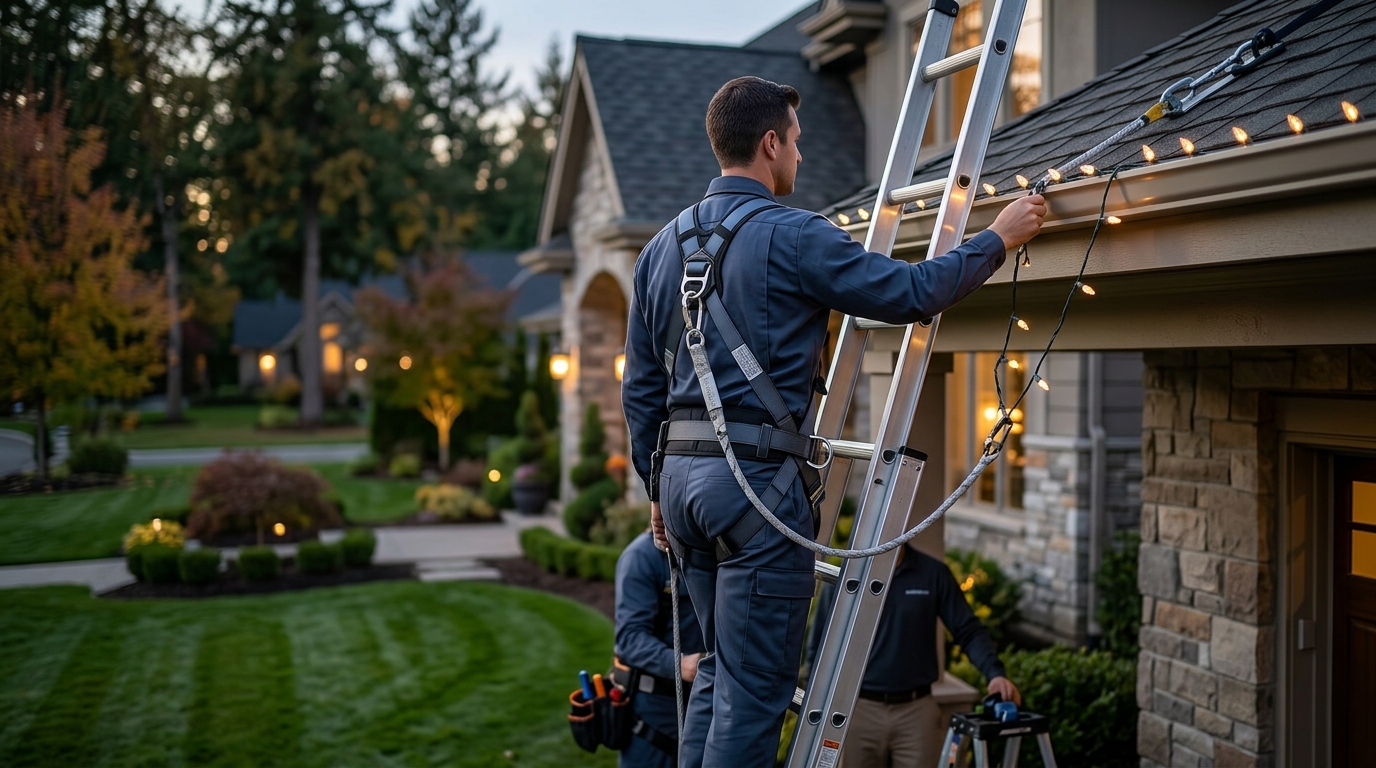
Professional holiday light installers use fall protection, stable ladders, and strict electrical protocols to prevent injuries. Radiant Holiday Designs prioritizes these safety measures to ensure a secure installation process. This guide details the specific equipment and techniques used when working at heights. For additional details, review the .
Fall Protection Harnesses
Working at heights requires rigorous safety standards. A fall protection harness is a wearable device designed to arrest a fall and prevent serious injury. Professional crews use full-body harnesses that distribute force across the shoulders, chest, and legs. This design reduces the risk of spinal compression during a fall arrest. For additional details, review the Customer Experience.
Anchor Points and Tethers
Installers attach harnesses to secure anchor points on the roof or structure. Tethers must be short enough to prevent the worker from reaching a lower level. This technique, known as fall restraint, prevents the worker from falling in the first place. It is the preferred method for roof work when possible. For additional details, review the Frequently Asked Questions.
Inspection and Maintenance
Every harness is inspected before each use. Inspectors check for frayed webbing, damaged buckles, and worn stitching. Any component showing signs of wear is removed from service immediately. This strict maintenance protocol ensures that safety equipment remains reliable throughout the season. For additional details, review the About.
Ladder Safety Techniques
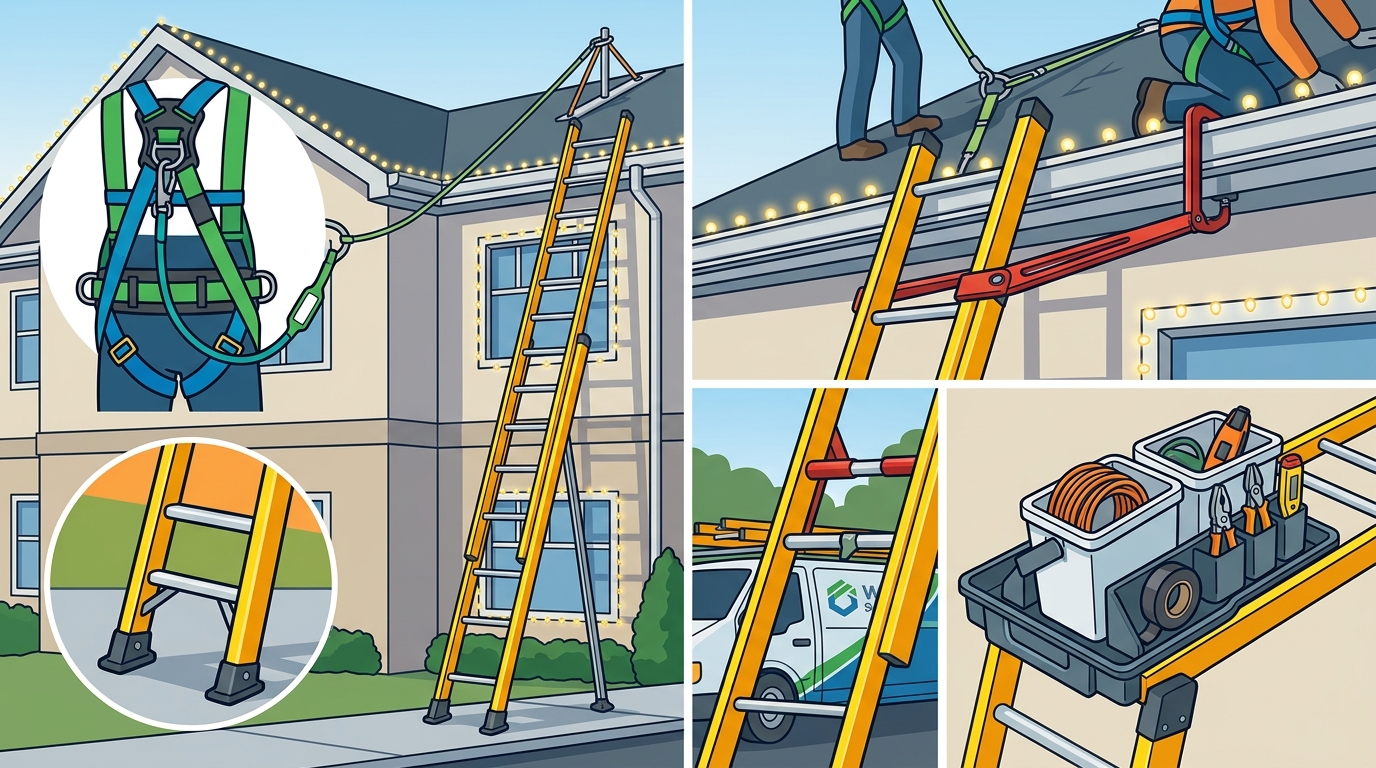
Ladders are the most common access method for residential installations. Ladder safety is a set of practices that ensures stable footing and secure climbing. Installers follow the 4-to-1 rule, which requires the base of the ladder to be one foot away from the wall for every four feet of height. This angle provides optimal stability.
Extension and Stepladders
Extension ladders are used for reaching higher rooflines. They must be secured at the top to prevent sliding. Stepladders are used for lower eaves and gutters. Both types require three points of contact at all times. This means two hands and one foot, or two feet and one hand, must always be in contact with the ladder.
Surface Conditions
Installers assess the ground surface before placing a ladder. Soft or uneven ground requires the use of ladder stands or leveling feet. Ice and snow are major hazards. Crews clear the area around the ladder base to prevent slipping. This simple step prevents many common ladder accidents.
Electrical Safety Precautions
Electrical hazards are a primary concern during holiday light installation. Electrical safety is the practice of preventing shocks, burns, and fires caused by improper handling of power. Installers use insulated tools and wear protective gloves when working near power sources. They also ensure that all lights are rated for outdoor use.
Power Source Management
Wiring and Connections
All connections are made with weatherproof connectors. Installers avoid splicing wires in the field. Instead, they use pre-made, sealed connections that resist water intrusion. This practice prevents short circuits and potential fire hazards. Proper wiring ensures that the display remains safe throughout the season.
Aerial Lift Equipment
For larger properties or difficult rooflines, aerial lifts provide a stable platform. An aerial lift is a vehicle-mounted platform that raises workers to elevated positions. These machines offer a safer alternative to ladders for extensive roof work. They allow installers to move along the roofline without repeatedly climbing and descending.
Operation and Stability
Limitations and Use Cases
Aerial lifts are not suitable for all properties. Narrow driveways or low overhead obstructions can limit their use. Installers assess the site before deciding to use a lift. For most residential homes, ladders and harnesses are sufficient. Aerial lifts are reserved for commercial properties or complex residential structures.
Site Hazard Assessment
A thorough site assessment is the first step in any installation. Site hazard assessment is the process of identifying potential dangers before work begins. Installers walk the property to identify overhead power lines, tree branches, and uneven terrain. This proactive approach allows them to plan a safe work sequence.
Overhead Obstacles
Overhead power lines are a critical hazard. Installers maintain a safe distance from all power lines. They never use ladders or lifts near energized lines. If a line is in the way, they coordinate with the utility company to de-energize it. This coordination ensures that no worker is exposed to electrocution risks.
Environmental Factors
Weather conditions significantly impact safety. Installers monitor wind speeds and precipitation forecasts. Work is suspended during high winds or lightning. Wet surfaces increase the risk of slipping. Crews adjust their schedules to avoid adverse weather. This flexibility ensures that safety is never compromised for convenience.
Spotter Protocols
Spotters play a vital role in maintaining safety during installations. A spotter is a ground-level worker who monitors the installer and the equipment. They provide verbal cues and physical assistance when needed. This two-person rule ensures that no worker is left unattended at height.
Communication and Signaling
Spotters use clear, standardized signals to communicate with installers. These signals indicate when to stop, move, or lower equipment. Clear communication prevents misunderstandings that could lead to accidents. Spotters also monitor the surrounding area for pedestrians or vehicles. They ensure that the work zone remains secure.
Emergency Response
Spotters are trained in basic first aid and emergency response. They know how to call for help and how to stabilize a worker in case of a fall. This preparedness reduces the impact of any incident. The presence of a trained spotter adds an extra layer of safety to every installation.
Key Takeaways
- Full-body harnesses are essential for fall protection when working on roofs.
- The 4-to-1 rule ensures ladder stability and prevents tipping.
- GFCI outlets and insulated tools are critical for electrical safety.
- Aerial lifts provide a stable platform for large or complex installations.
- Site assessments identify hazards like power lines and uneven ground.
- Spotters provide communication and emergency support for installers.
- Weather conditions dictate when work can safely proceed.
- Regular equipment inspection ensures all safety gear is functional.
Frequently Asked Questions
Do installers use harnesses on every roof?
Yes, professional installers use full-body harnesses whenever working on a roof. This is a standard safety requirement to prevent falls. The harness is attached to secure anchor points on the structure.
How do installers prevent ladders from slipping?
Installers use the 4-to-1 rule and secure the top of the ladder. They also use ladder stands on uneven ground. These measures ensure that the ladder remains stable during use.
What is a GFCI outlet?
A GFCI outlet is a safety device that cuts power if it detects a current imbalance. It prevents shocks in wet conditions. Installers use GFCI outlets for all outdoor power sources.
When are aerial lifts used?
Aerial lifts are used for large properties or difficult rooflines. They provide a stable platform for workers. Most residential installations use ladders and harnesses instead.
How do installers handle overhead power lines?
Installers maintain a safe distance from power lines. They never work near energized lines. If necessary, they coordinate with the utility company to de-energize the line.
What is the role of a spotter?
A spotter monitors the installer from the ground. They provide communication and emergency support. This two-person rule ensures that no worker is left unattended.
Do installers work in bad weather?
No, installers suspend work during high winds or lightning. Wet surfaces increase the risk of slipping. Safety is always the priority over schedule.
How often is safety equipment inspected?
Safety equipment is inspected before every use. Any damaged component is removed from service. This strict protocol ensures that all gear remains reliable.
Conclusion
Safety is the foundation of professional holiday light installation. Radiant Holiday Designs implements rigorous protocols to protect our crews and your property. From fall protection to electrical safety, every step is designed to prevent accidents. We handle the ladders, the lights, and the takedown so you can enjoy the season. To plan your visit, .