Height Safety Protocols for Professional Holiday Light Installers
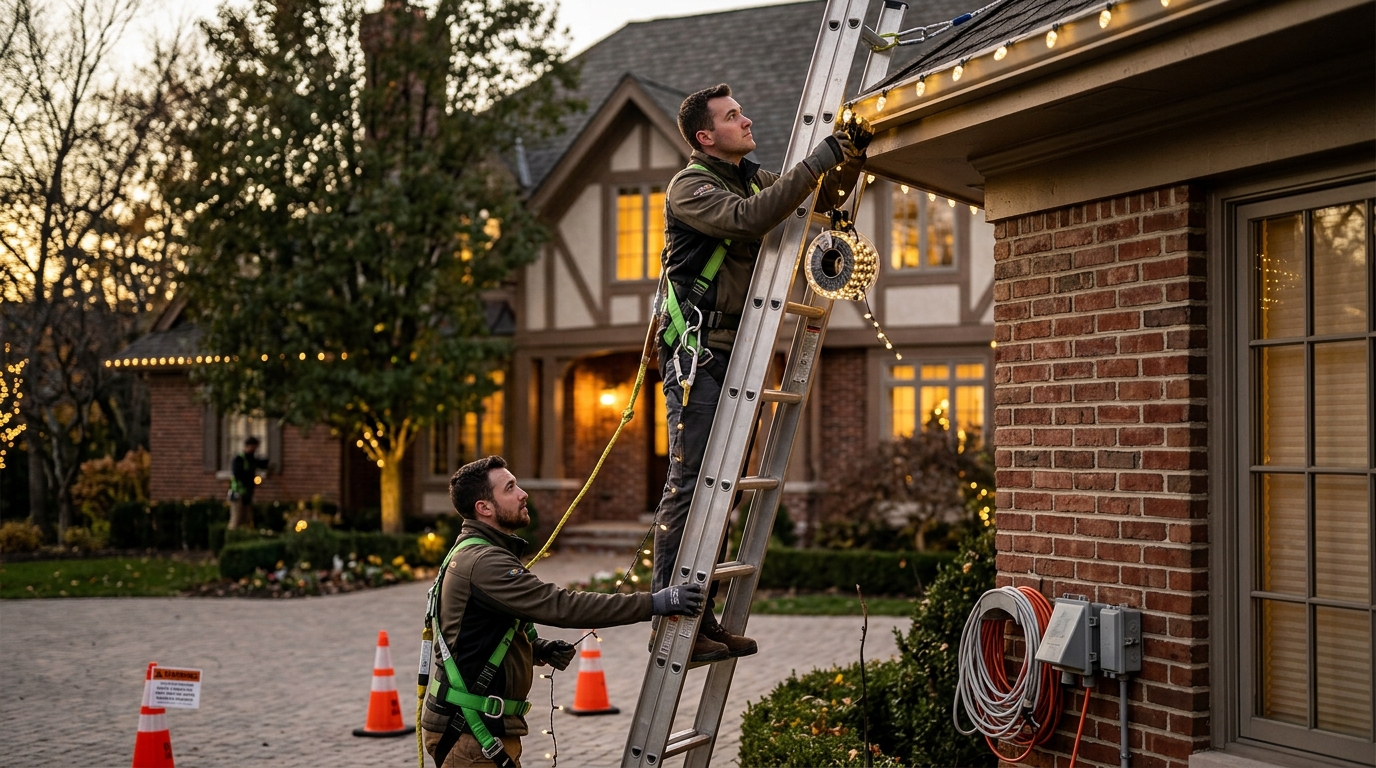
Professional installers use fall protection, stable ladders, and strict electrical protocols to prevent injuries. Radiant Holiday Designs prioritizes these safety measures to ensure your property remains secure. This guide details the specific equipment and procedures used during installation. For additional details, review the .
Fall Protection Harnesses
Working at heights requires rigorous safety standards. A full-body harness is the primary defense against falls. It distributes impact forces across the body to minimize injury risk. For additional details, review the Customer Experience.
Equipment Standards
Anchor Point Selection
Safe anchoring requires solid structural points. Installers avoid attaching to eaves or gutters. They use dedicated roof anchors or ground-based lifelines instead. For additional details, review the Frequently Asked Questions.
Ladder Safety Techniques
Ladders are the most common access tools for residential properties. Proper setup prevents slips and structural failures. Stability is the core principle of ladder use. For additional details, review the About.
The Four-to-One Rule
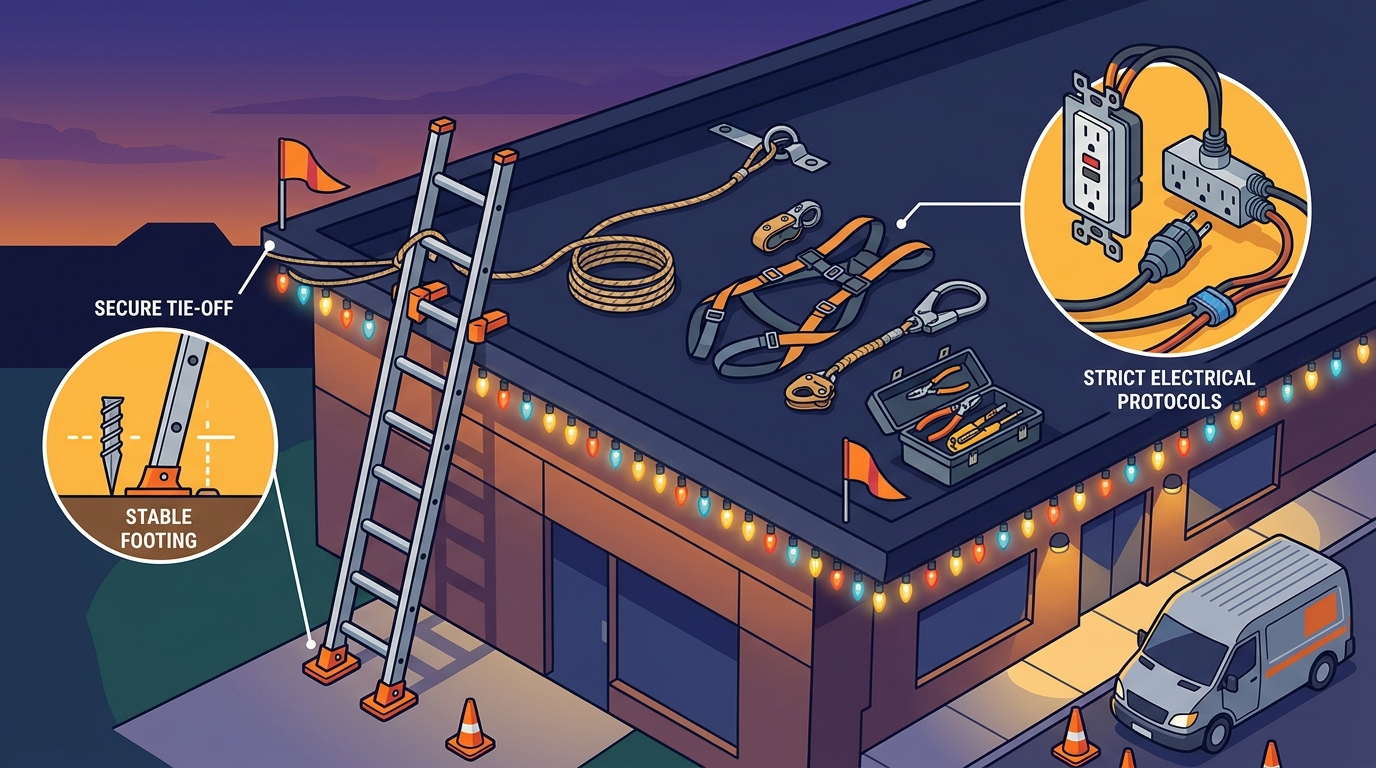
For every four feet of height, the base moves one foot out. This angle provides optimal stability. Deviating from this ratio increases the risk of tipping.
Surface Preparation
Installers assess the ground before placing a ladder. Soft soil or uneven terrain requires leveling pads. These pads distribute weight and prevent sinking.
Electrical Safety Precautions
Electricity poses unique risks during holiday installations. Installers follow strict protocols to prevent shocks and fires. Insulation and grounding are critical components.
Insulation and Grounding
All tools are insulated for live work. Ground fault circuit interrupters (GFCIs) protect against shocks. These devices cut power instantly if a fault is detected.
Weather Considerations
Wet conditions increase electrical conductivity. Installers monitor weather forecasts closely. They may pause work during heavy rain or lightning threats.
Aerial Lift Equipment
Large commercial properties often require aerial lifts. These machines provide stable platforms at significant heights. They reduce the physical strain on installers.
Operator Certification
Operating an aerial lift requires specific training. Operators must understand load limits and stability controls. Certification ensures safe and efficient operation.
Site Clearance
Installers verify overhead clearance before deploying lifts. Power lines and tree branches require careful planning. This prevents accidental contact and damage.
Site Hazard Assessment
Every property presents unique challenges. A thorough site assessment identifies potential dangers before work begins. This proactive approach prevents accidents.
Structural Integrity
Environmental Factors
Wind speed and temperature affect safety. High winds can destabilize ladders and lifts. Installers adjust their plans based on real-time conditions.
Spotter Protocols
A spotter provides a second set of eyes during high-risk tasks. They monitor the installer and the surrounding environment. This role is critical for maintaining situational awareness.
Communication Standards
Clear verbal communication is essential. Spotters use standardized commands to signal movements. This reduces the chance of misinterpretation.
Emergency Response
Spotters are trained in basic first aid. They know how to respond to falls or electrical incidents. Their presence ensures rapid assistance if needed.
Key Takeaways
- Full-body harnesses are mandatory for work above six feet.
- The four-to-one rule ensures ladder stability on all surfaces.
- GFCI protection is required for all electrical equipment.
- Aerial lifts require certified operators and clear overhead space.
- Site assessments identify structural and environmental hazards.
- Spotters provide critical oversight during high-risk tasks.
- Weather conditions directly impact the safety of outdoor work.
- Professional crews follow strict protocols to protect your property.
Frequently Asked Questions
Do installers use harnesses for every job?
Yes, harnesses are used whenever working above a certain height. This ensures safety even on low roofs or steep pitches.
How do ladders stay stable on uneven ground?
Installers use leveling pads and assess the terrain. They adjust the base position to maintain the correct angle.
What happens if it starts raining during installation?
Work pauses immediately if conditions become unsafe. Installers wait for the weather to clear before resuming.
Are aerial lifts used on residential properties?
They are used for larger homes or difficult access points. Smaller properties typically rely on ladders and harnesses.
How does a spotter communicate with the installer?
They use clear verbal commands and hand signals. This ensures both parties understand the next action.
What is a GFCI and why is it important?
A GFCI detects electrical faults and cuts power. It prevents shocks and protects both the installer and the home.
Conclusion
Safety is the foundation of professional holiday lighting. Radiant Holiday Designs implements these rigorous protocols to protect your home and family. Our team handles the ladders, the lights, and the takedown with precision. Get My Free Design Quote to secure your date before installation books fill up.