
Which is Better for a Full Property Display: Gutter Lights or Wrapped Trees?
For a full property display, neither gutter lights nor wrapped trees is universally better; the optimal choice depends on your architectural style, tree density, and desired visual impact. Radiant Holiday Designs designs, installs, maintains, removes, and stores holiday lighting for residential and commercial clients across the USA. This guide compares the two primary display methods, analyzes labor intensity, and outlines a layered strategy that maximizes curb appeal while minimizing maintenance headaches. For additional details, review the radiantholidaydesignsllc com.
Combined Display Strategy
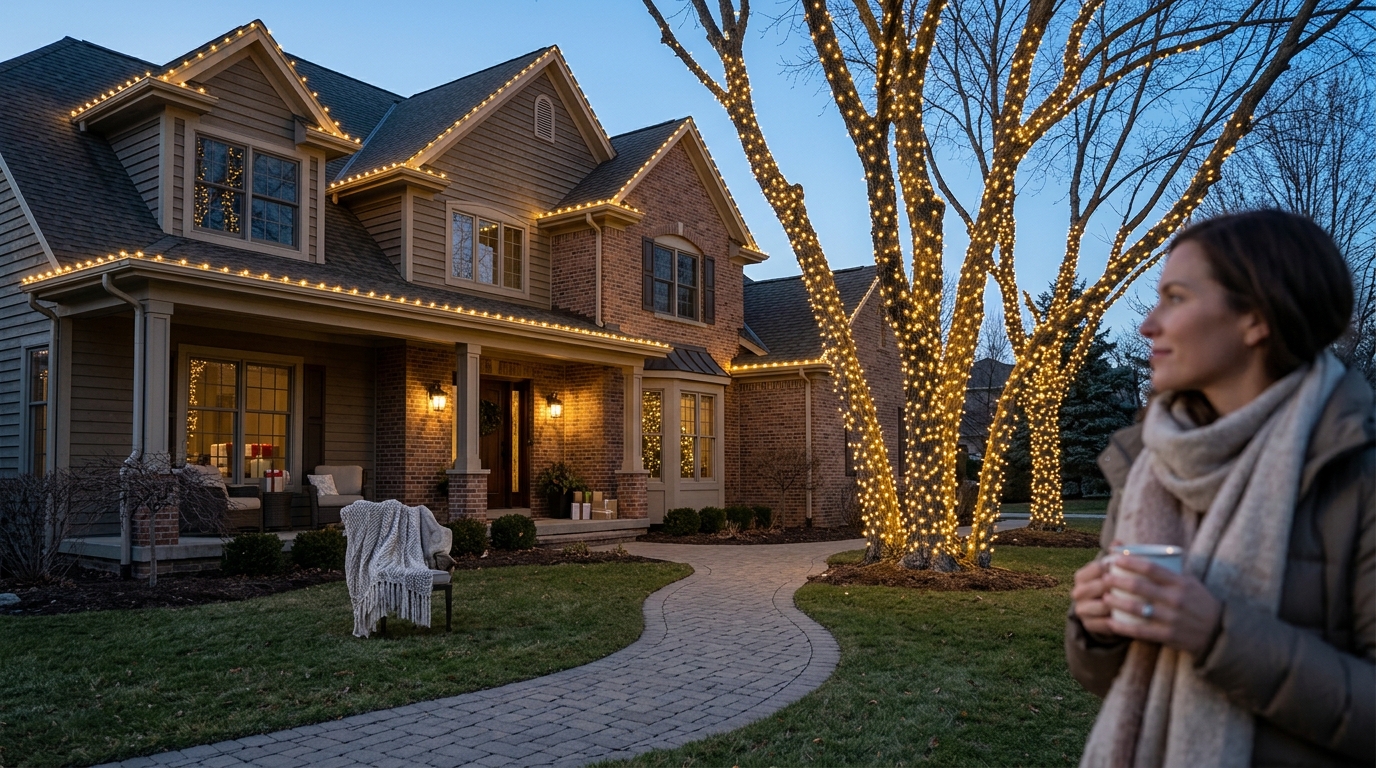
The most effective full property display rarely relies on a single technique. A combined display strategy integrates gutter lights, roofline accents, and wrapped trees to create a cohesive visual narrative. This approach ensures that no part of the property feels neglected while avoiding the chaotic look of random light placement. By blending these elements, homeowners achieve a balanced aesthetic that highlights both the structure and the landscape. For additional details, review the .
Architectural Harmony
Gutter lights define the building's silhouette, while wrapped trees add volume and texture to the yard. When used together, they create a dialogue between the house and the garden. The rigid lines of the roofline contrast beautifully with the organic shapes of the trees. This contrast is key to a professional-grade installation. For additional details, review the Customer Experience.
Visual Flow
Light should flow from the house outward to the landscape. Starting with bright gutter lights and transitioning to softer tree wraps guides the viewer's eye naturally. This flow prevents visual clutter and ensures the display feels intentional rather than haphazard. Radiant Holiday Designs specializes in creating this seamless transition for residential clients. For additional details, review the Frequently Asked Questions.
Labor Intensity Comparison
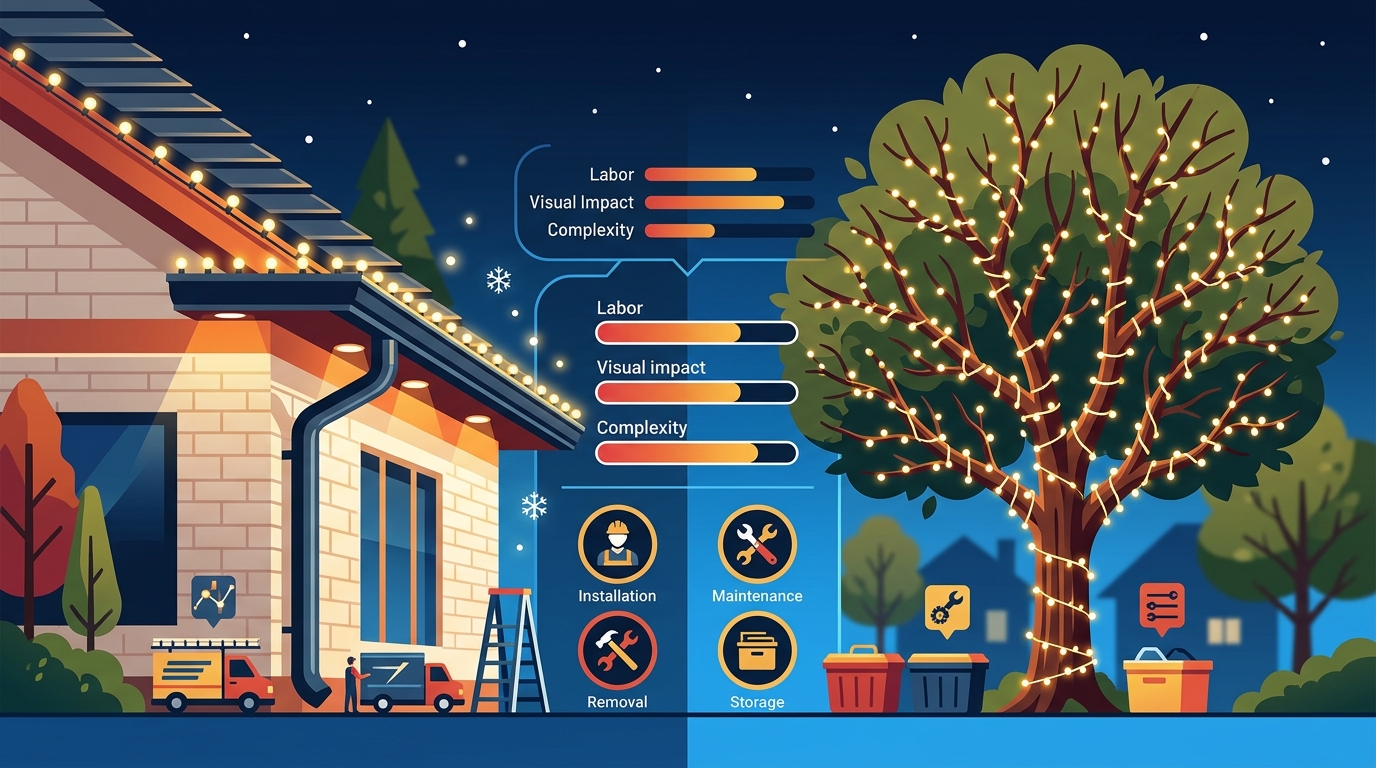
Understanding the labor involved in each method helps set realistic expectations for installation and removal. Gutter lights generally require less time per linear foot than wrapped trees, but they demand higher precision. Tree wrapping is more labor-intensive due to the need to navigate branches and ensure even coverage. The total labor cost depends on the size of the property and the complexity of the design. For additional details, review the About.
Installation Time
Installing gutter lights involves securing clips to the gutter and threading the wire. This is a repetitive task that can be completed quickly by experienced technicians. Tree wrapping requires careful maneuvering around branches, which slows down the process. A single large tree can take significantly longer to wrap than a long stretch of gutter.
Removal and Storage
Removal is often more critical than installation for long-term maintenance. Gutter lights are easier to remove and coil, reducing the risk of tangling. Wrapped trees require careful unwrapping to prevent damage to the lights and the tree. Proper storage is essential to extend the life of your investment. Radiant Holiday Designs handles the entire lifecycle, including removal and secure storage, to protect your assets.
Tree Wrapping Techniques
Tree wrapping is an art form that requires skill to achieve a uniform look. The goal is to create a spiral pattern that covers the tree evenly without leaving large gaps. Different techniques suit different tree types and sizes. Choosing the right technique ensures that the tree glows from all angles.
Spiral Wrapping
Spiral wrapping is the most common technique for full tree coverage. The wire is wrapped around the tree in a continuous spiral from the base to the top. This method provides a dense, glowing effect that is ideal for large evergreens. It requires consistent tension to maintain the spiral shape.
Branch Wrapping
Branch wrapping focuses on individual branches rather than the entire trunk. This technique is suitable for trees with sparse foliage or for creating a more delicate look. It allows for greater control over the light distribution. Branch wrapping is often used in combination with spiral wrapping for a layered effect.
Gutter Light Placement
Gutter light placement is critical for achieving a clean, professional look. The lights should follow the contour of the gutter without sagging or bunching. Proper placement ensures that the lights are visible from the street and from the yard. It also protects the lights from weather and physical damage.
Clip Selection
The type of clip used to secure the lights to the gutter is important. Clips should be sturdy enough to hold the weight of the lights but gentle enough not to damage the gutter. Different clip types are available for different gutter profiles. Choosing the right clip ensures a secure and invisible installation.
Spacing and Tension
Consistent spacing between lights is essential for a uniform glow. Tension should be maintained to prevent sagging between clips. Sagging lights can look unprofessional and may be more susceptible to damage. Proper tension ensures that the lights remain taut and aligned.
Layered Display Design
Layered display design involves using multiple types of lights to create depth and dimension. This approach goes beyond simple outlining to create a three-dimensional effect. By layering lights at different heights and intensities, you can create a dynamic display that changes throughout the night. This technique is particularly effective for large properties with varied landscapes.
Foreground and Background
Foreground elements, such as shrubs and small trees, should be lit with softer, warmer lights. Background elements, such as large trees and the house, can use brighter, cooler lights. This contrast creates depth and draws the eye into the scene. It also helps to define the boundaries of the property.
Accent Lighting
Accent lighting highlights specific features, such as a mailbox, a statue, or a particular tree. These accents add interest and personality to the display. They should be used sparingly to avoid overwhelming the main display. Accent lighting can be used to create focal points that guide the viewer's attention.
Roofline Lighting Architecture
Peak and Eave Lighting
The roof peak is the highest point of the house and should be the brightest part of the display. Eave lighting follows the edge of the roof and provides a continuous line of light. Together, they create a clear outline of the house. This outline is visible from a distance and sets the tone for the entire display.
Dormer and Gable Lighting
Dormers and gables add complexity to the roofline and require careful lighting. These elements should be lit to match the intensity of the main roofline. Consistency is key to a professional look. Mismatched lighting on dormers can detract from the overall effect. Radiant Holiday Designs ensures that every architectural detail is lit with precision.
Tree Wrapping Depth
Density and Brightness
The density of the wrap directly affects the brightness of the tree. A dense wrap can be overwhelming if not balanced with other elements. A shallow wrap may be too subtle to be noticed from a distance. Finding the right balance is essential for a harmonious display. The brightness should be consistent across all trees in the display.
Tree Type Considerations
Layered Lightscaping Design
Layered lightscaping design is the most advanced technique for creating a full property display. It involves using multiple layers of light to create a complex, multi-dimensional scene. This technique requires a deep understanding of light, color, and space. It is the hallmark of a professional installation. Layered lightscaping transforms a simple display into a work of art.
Color and Temperature
Color and color temperature play a crucial role in layered lightscaping. Warm white lights create a cozy, inviting atmosphere. Cool white lights create a crisp, modern look. Colored lights can be used to add interest and personality. The choice of color should be consistent throughout the display to avoid a chaotic look.
Movement and Animation
Key Takeaways
- A combined display strategy using both gutter lights and wrapped trees creates the most balanced and professional look.
- Gutter lights are less labor-intensive to install and remove but require high precision for a clean look.
- Tree wrapping is more labor-intensive but adds volume and texture to the landscape.
- Roofline lighting architecture defines the shape of the house and serves as the visual anchor for the display.
- Tree wrapping depth should be adjusted based on the type of tree and the desired brightness.
- Layered lightscaping design is the most advanced technique, using color, temperature, and movement to create a dynamic scene.
- Professional installation and maintenance by Radiant Holiday Designs ensures a safe, durable, and beautiful display.
Frequently Asked Questions
Are gutter lights better than wrapped trees for a full property display?
Neither is universally better. Gutter lights define the house, while wrapped trees add landscape volume. A combined strategy using both is often the most effective approach for a full property display.
How much labor is involved in tree wrapping?
Tree wrapping is labor-intensive due to the need to navigate branches and ensure even coverage. It takes longer than installing gutter lights but results in a high-impact visual effect.
What is the best technique for wrapping a large evergreen tree?
Spiral wrapping is the best technique for large evergreens. It provides dense, even coverage from the base to the top, creating a glowing effect that is visible from all angles.
How do I choose the right clip for gutter lights?
Choose a clip that matches your gutter profile and is sturdy enough to hold the weight of the lights. The clip should be gentle on the gutter to prevent damage.
What is layered display design?
Layered display design involves using multiple types of lights at different heights and intensities to create depth and dimension. It goes beyond simple outlining to create a three-dimensional effect.
How does roofline lighting architecture work?
Roofline lighting architecture focuses on the structural elements of the house, such as the peak, eaves, and dormers. It defines the shape of the house and creates a strong visual anchor for the display.
What is tree wrapping depth?
Does Radiant Holiday Designs offer storage for holiday lights?
Yes, Radiant Holiday Designs designs, installs, maintains, removes, and stores holiday lighting for residential and commercial clients. Secure storage is part of their service to protect your investment.
Conclusion
Choosing between gutter lights and wrapped trees is not a binary decision. The best full property display combines both techniques to create a balanced, professional, and visually stunning result. By understanding the labor intensity, placement techniques, and design principles of each method, you can make an informed decision that suits your property and preferences. Radiant Holiday Designs is your trusted partner for designing, installing, maintaining, removing, and storing holiday lighting. today to plan your perfect display. Learn more: radiantholidaydesignsllc com.