What Services Should I Look For When Comparing Holiday Lighting Companies in My Area?
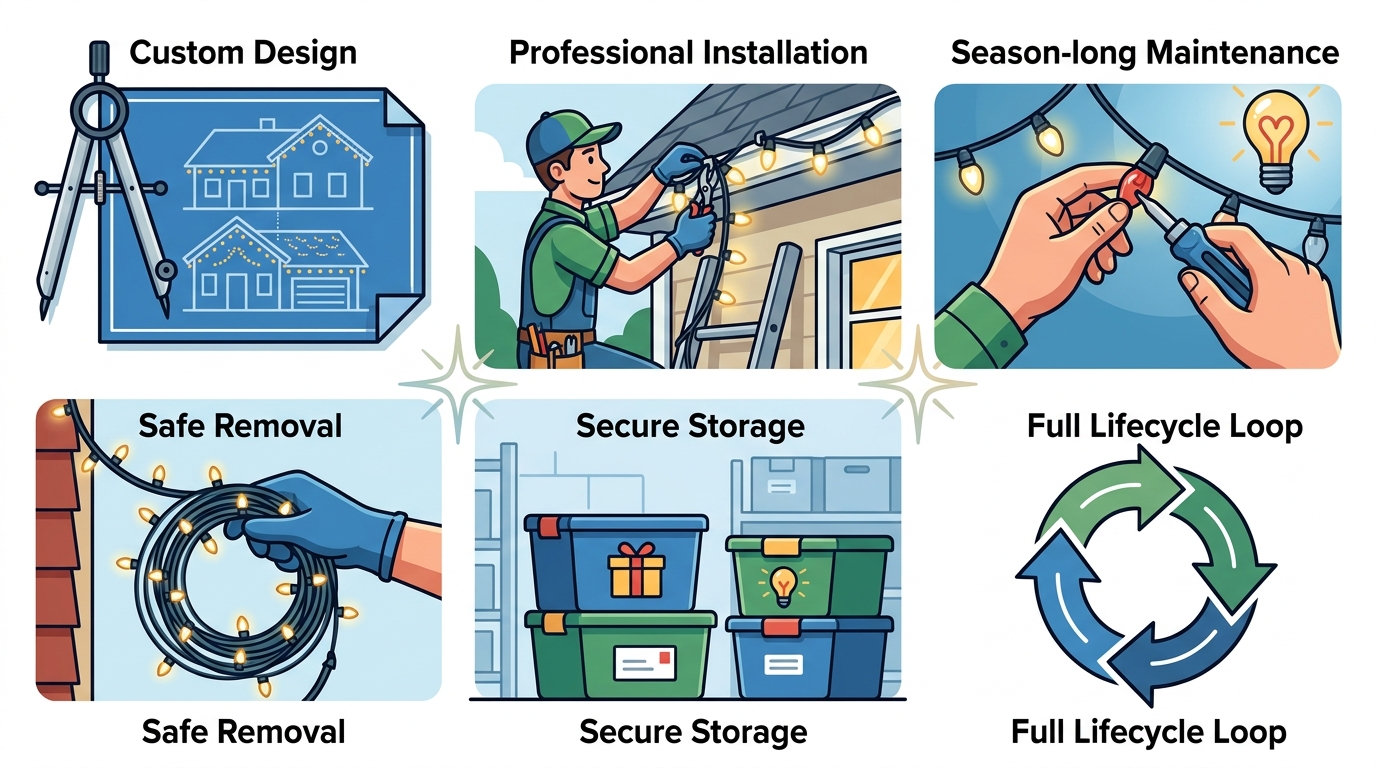
When comparing holiday lighting companies, you should look for a provider that handles the entire lifecycle of your display, including custom design, professional installation, season-long maintenance, safe removal, and secure storage. Radiant Holiday Designs operates on this exact model, ensuring you never have to touch a ladder. This guide breaks down the six critical service pillars you must evaluate before signing a contract, helping you distinguish between a true full-service partner and a basic installer.
Full Service Packages
Many companies advertise installation but exclude the takedown or storage phases, leaving the customer with a massive pile of tangled lights in the spring. A true full-service partner, such as Radiant Holiday Designs, integrates the entire lifecycle into a single agreement. This ensures continuity of care and a single point of contact for any issues that arise during the season. You should ask potential vendors if their contract covers the removal and storage of materials, or if those are separate line items that could double your total cost.
Defining the Scope of Work
The scope of work in a full-service package should explicitly list the deliverables. These typically include a site survey, a design proposal, the installation of lights and clips, a maintenance schedule, and the final removal and storage. If a company only offers installation, you are essentially hiring a laborer, not a design partner. The distinction matters because design partners take ownership of the aesthetic outcome, while laborers only take ownership of the physical hanging process.
Design Consultation
Design consultation is the preliminary phase where a professional assesses your property's architecture, rooflines, and landscape to create a custom display plan. This step is critical because a generic template rarely flatters the unique geometry of a specific home. A high-quality consultation involves a physical walkthrough of the property, often referred to as a site survey, to identify optimal mounting points and power sources.
At Radiant Holiday Designs, the process begins with a free on-site design session. The team walks the property to understand the specific rooflines, trees, and architectural features. This data is then used to draft a custom display that complements the home's structure rather than overwhelming it. You should look for companies that provide a visual mockup or a detailed written proposal before any work begins. This allows you to approve the aesthetic direction and make adjustments before the crew arrives with ladders and lights.
Architectural Integration
Professional design focuses on integration, not just coverage. This means placing lights to accentuate eaves, gutters, and roof peaks rather than simply draping them randomly. The goal is to create a cohesive look that appears intentional and polished. A skilled designer will consider the color temperature of the lights and the spacing of the strands to ensure a uniform glow. This level of detail is what separates a professional installation from a DIY attempt.
In-Season Maintenance
In-season maintenance is the ongoing monitoring and repair of the installed display throughout the holiday period. This service is often overlooked in comparisons, yet it is the primary differentiator between a reliable provider and a one-time installer. Weather events, such as wind, snow, or ice, can dislodge clips or damage strands. A full-service company includes a maintenance protocol that involves periodic inspections to ensure the display remains intact and safe.
When comparing companies, ask about their response time for maintenance requests. If a section of lights goes out or a strand falls, how quickly will a technician be dispatched? Radiant Holiday Designs includes season-long maintenance in their service model, ensuring that any issues are addressed promptly. This proactive approach protects your investment and maintains the visual impact of the display. You should verify that the maintenance service is included in the base price and not an optional add-on that requires a separate service call fee.
Monitoring and Inspection
Effective maintenance involves both remote monitoring and physical inspections. Some providers use smart controllers that can detect power failures, while others rely on scheduled physical visits. A combination of both is ideal. The provider should have a clear protocol for identifying issues and a dedicated team for executing repairs. This ensures that your display remains consistent from the first week of November through the end of the season.
Removal and Storage
Removal and storage is the post-season phase where the lights are taken down, cleaned, organized, and stored securely until the next year. This phase is often the most neglected by homeowners who attempt DIY installations, leading to tangled wires and damaged bulbs. A professional service handles this process with care, ensuring that the materials are preserved for future use. This is a key component of the full-service model offered by Radiant Holiday Designs.
When evaluating a company, you must ask who owns the lights. In many full-service models, the company owns the lights and stores them in their own facility. This means you do not have to worry about finding space in your garage or basement. The company is responsible for the condition of the equipment. If the lights are damaged during storage, the company replaces them. This transfers the risk of equipment degradation from you to the provider. You should confirm that the storage facility is climate-controlled and secure to prevent theft or weather damage.
Organization and Inventory
Professional storage involves meticulous organization. Lights are coiled, labeled, and stored in specific bins or racks. This organization allows for a faster and more accurate installation the following year. It also ensures that no pieces are lost or misplaced. A company that treats storage as an afterthought will likely have a slower installation process the next season, as they spend time untangling and sorting materials. Look for providers who emphasize their storage protocols as a core part of their service.
Insurance and Safety
Insurance and safety protocols are non-negotiable requirements for any company that sends crews onto your property. Working at heights involves inherent risks, and a professional company must carry comprehensive liability insurance and workers' compensation. This protects you from financial liability if a crew member is injured on your property or if the crew causes damage to your home or landscaping. You should request a Certificate of Insurance (COI) from any company you are considering.
At Radiant Holiday Designs, all crew members are insured, and the company maintains the necessary coverage to protect clients. Safety is not just about insurance; it is about training and equipment. Professional crews use commercial-grade ladders, harnesses, and safety gear. They are trained in fall protection and safe ladder practices. You should ask about the safety training their crews receive and what equipment they use. A company that cuts corners on safety is a liability you cannot afford.
Liability and Damage Protection
Commercial Grade Materials
When comparing companies, ask about the quality of the lights and clips they use. Radiant Holiday Designs uses commercial-grade lights and custom clips to ensure a safe and precise installation. Custom clips are designed to hold the lights securely without damaging the roof or gutters. They are also reusable, which reduces waste and cost over time. You should avoid companies that use cheap, consumer-grade lights, as these are more likely to fail during the season, leading to maintenance issues and a less attractive display.
Durability and Lifespan
The lifespan of commercial-grade lights is significantly longer than that of consumer-grade products. This means that the company can reuse the same lights for multiple seasons, which is more sustainable and cost-effective. It also means that the lights are less likely to burn out or fade over time. When evaluating a provider, ask about the expected lifespan of their materials and how they handle replacements. A company that invests in high-quality materials is committed to delivering a high-quality result.
Comparison of Service Models
| Service Component | DIY Installation | Basic Installer | Full-Service Partner (e.g., Radiant Holiday Designs) |
|---|---|---|---|
| Design Consultation | None | Optional or Template-Based | Custom On-Site Design |
| Installation | Homeowner | Professional Crew | Professional Crew |
| Maintenance | Homeowner | Not Included | Season-Long Included |
| Removal | Homeowner | Not Included | Professional Crew |
| Storage | Homeowner | Not Included | Secure Company Storage |
| Insurance | Homeowner's Policy | Variable | Comprehensive Liability |
| Materials | Consumer Grade | Variable | Commercial Grade |
Key Takeaways
- Full service packages should cover design, installation, maintenance, removal, and storage in a single agreement.
- Design consultation involves a physical site survey to create a custom plan that complements your home's architecture.
- In-season maintenance ensures that weather-related issues are addressed promptly, maintaining the display's integrity.
- Removal and storage are critical for preserving the condition of the lights and saving you time and space.
- Insurance and safety protocols are essential to protect you from liability and ensure safe working practices.
- Always request a Certificate of Insurance and verify the quality of the materials used.
- Choose a provider that treats the entire lifecycle of the display as a single, cohesive service.
Frequently Asked Questions
What is the difference between a basic installer and a full-service provider?
A basic installer typically only handles the physical hanging of lights and leaves the removal and storage to the homeowner. A full-service provider, like Radiant Holiday Designs, manages the entire process, including design, maintenance, removal, and storage.
Do I need to provide my own lights?
No. In a full-service model, the company provides the lights and hardware. You do not need to purchase or store any equipment. The company owns the materials and is responsible for their condition.
How long does the installation process take?
Installation time varies depending on the size of the home and the complexity of the design. Most residential installations are completed in a single day. The company will provide a timeline during the design consultation phase.
What happens if the lights are damaged during the season?
Is the company insured?
Yes. Reputable companies carry comprehensive liability insurance and workers' compensation. You should request a Certificate of Insurance to verify their coverage before signing a contract.
Can I customize the design?
Yes. The design consultation phase allows you to review and approve the proposed design. You can request changes to the layout, color, or style before the installation begins.
How are the lights stored?
Professional companies store lights in secure, climate-controlled facilities. The lights are organized and labeled to ensure they are ready for quick installation the following year.
What is the cost of full-service holiday lighting?
Costs vary based on the size of the home and the complexity of the design. A full-service package is typically more expensive than a basic installation, but it offers greater value by eliminating the hassle of maintenance and storage.
Conclusion
Choosing the right holiday lighting company requires looking beyond the price tag and evaluating the full scope of services offered. A true full-service partner handles the entire lifecycle of your display, from custom design to secure storage. Radiant Holiday Designs exemplifies this model, providing a seamless experience that allows you to enjoy the season without the hassle. By prioritizing design, maintenance, safety, and quality materials, you can ensure that your home is the best-looking on the block. To plan your visit, for a free design quote.